
The Campaign
The campaign
Discover when the £10,000 threshold applies—and what your practice may need to do
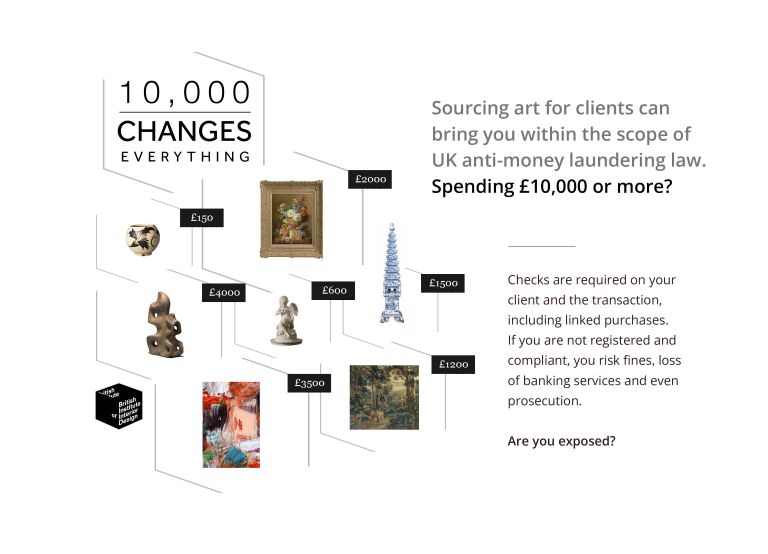
When many people think about anti-money laundering laws, they think of banks, solicitors or accountants rather than the design and creative sectors.
However UK anti-money laundering regulations also cover anyone who by way of business negotiates sales or purchases of paintings, certain prints, certain photographs, sculpture and other works. parts of the art market. That means interior designers who source, purchase or are involved in transactions to purchase artwork for clients may have legal responsibilities they are completely unaware of. The BIID has previously published articles and run webinars on this topic but our conversations with designers have revealed that many are still unaware of the importance of this issue – and that is why we have launched the £10,000 Changes Everything campaign.
The aim of the campaign is simple: to help interior designers understand when these rules may apply, what their responsibilities are, and where to go for further guidance.
Interior design and sourcing art
Many interior designers source paintings, sculpture, photography and other original works of art as part of their work for clients. In many cases the designer isn't intermediary “recommending pieces, liaising with galleries, arranging purchases or advising and assisting acting their client. It's precisely these activities that can bring a business within the scope of the UK's anti-money laundering regulations. If you or your business are undertaking these activities you may be considered an ‘Art Market Participant’ and be required to register with HMRC.
The £10,000 threshold
The regulations generally apply to designers where a transaction involving works of art is worth £10,000 or more. However, this doesn't necessarily mean one artwork worth £10,000. The law covers a single or “series of linked transactions” which in simple terms means a number of separate art purchases that are connected because they form part of the same client project or the same overall arrangement. Splitting a purchase into more than one invoice, or allowing instalments payments of less than £10,000 do not avoid the regulations. For example, if you source several original artworks for the same client, those purchases may be treated as one transaction if they are linked. Simply splitting a purchase into smaller orders does not necessarily take it outside the regulations.
Works of Art that require compliance
Not all works of art are within the scope of the ML Regulations. Typically books, furniture etc are not included. What is included? Very generally, works of art includes: all paintings, drawings, collages, decorative plaques or similar picture, and all original sculpture or statuary. It also includes the following categories but each category is subject to a different qualifying limitation (edition number, requiring a signature, etc) original engraving, lithograph or print, sculpture casts, tapestry or other hangings, ceramics, enamel on copper or photographs. It is important to explore the specific object types, characteristics, limited edition, and signature rules for each category.
Becoming compliant (if required)
If you or your practice is an art market participant in transactions over the £10,000 threshold the following actions may be required:
- Registering with HM Revenue & Customs (HMRC) for anti-money laundering supervision (where required)
- Creating required documents such as a Business Risk Assessment and Policy
- Attending annual training
- Carrying out customer due diligence
- Identifying and verifying clients and, where appropriate, beneficial owners
- Assessing money laundering risk
- Keeping records
- Reporting suspicious activity where legally required
Why this matters for designers and design practices
HM Revenue & Customs has already taken enforcement action against many businesses in the art market for failing to comply with the regulations. This has included financial penalties for failing to register or meet other compliance requirements. The purpose of this campaign is not to alarm designers. It is to ensure that no practice is caught unaware. Understanding your legal responsibilities is simply part of running a professional business.
The BIID has launched an Art Market Participant helpline [link to helpline page], available exclusively to BIID members, to help provide support and guidance.
Could these rules apply to you?
Please review What qualifies as a work of art? to understand what items fall under the regulations
Please review the checklist we have created to see if these rules may apply to you and your practice
Understanding whether these rules apply to your business can help you continue sourcing artwork for clients with confidence.