
Case Study: Circular Economy
Case Study: Circular Economy
Real Patisserie by Materialise Interiors: A retail retrofit in Sussex
Case study by Chloe Bullock, Founder, Materialise Interiors
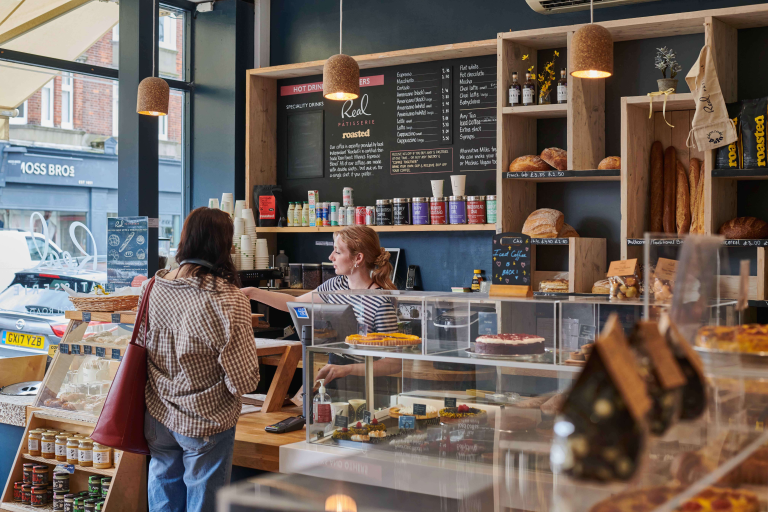
Founded by Paris-trained patissier Alastair Gourlay, the Sussex-based patisserie chain Real Patisserie has a strong commitment to minimising their environmental impact through all aspects of the business operations. From ethical ingredient sourcing, prioritising local producers within the county - to their Zero waste commitment where food is donated and even the flour dust swept from floors is recycled to produce energy and compost. Packaging and single use plastic has been addressed, reusable cups are incentivised. Local deliveries are made by eCargo bike. Their industrial bakery has 186 solar panels on the roof generating 85 megawatts of solar electricity every year. It also has an advanced evaporative cooling system and hot water heated by heat exchangers. Their shops are powered by renewable energy provider SSE Green Electricity.
Real Patisserie has been a loyal and regular client of Materialise Interiors for a decade, and over the years as their shops are updated or when new sites are acquired I have helped the company to demonstrate to customers their ethos and values through the design and specification of their spaces, using the design and selected materials as ways to extend their storytelling to customers.
In the UK, 90% of materials come from virgin sources, 80% of which are extracted overseas (Source: Circular Economy Foundation / Deloitte)
At a time when materials were hiking in price and in short supply, reusing everything possible and buying locally made business sense to the company. Any sourcing followed definitions from the Living Building Challenge ‘Living economy sourcing’ and B Corp’s ‘Local suppliers’ 50-mile (80 km radius or a broader metropolitan area). Timber in varying forms (site harvested, salvage, reclaimed, new) was the main additional material used in the project.
62% of the UK’s total waste can be attributed to the construction sector (Source: DEFRA, Official Statistics: UK Statistics on Waste 2025).
I then applied the three circular economy principles to the design concept: design out waste, keeping products and materials in use for as long as possible - and regenerate natural systems by avoiding use of toxic chemicals. Most of the efforts fit the circular economy five models:
Product life extension
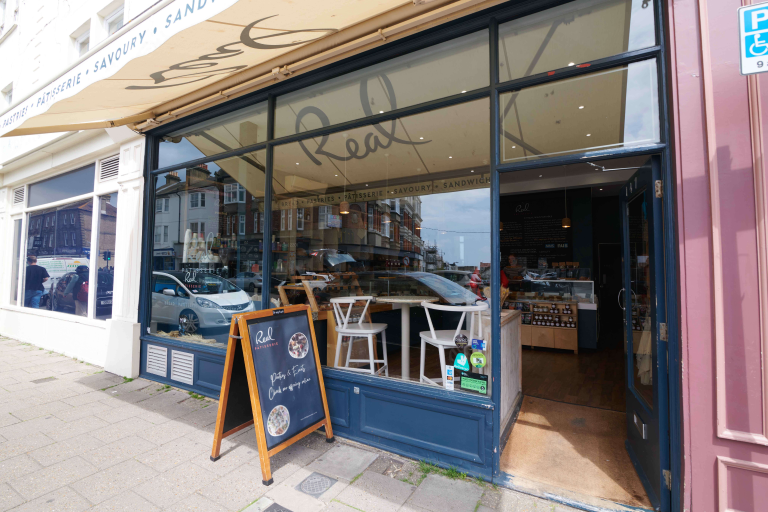
This new shop had previously been an independent patisserie, with an interim refit in between. The inherited refrigerated display units were in great condition - so were reused and updated with joinery by local company Woodstar Creative. (Emission saving: 3501.2 kg CO2e). Barely anything from the previous tenant went to landfill.
- The floor and lighting was perfectly good to reuse. (Emission savings: flooring 59 kg CO2e + lighting 74.6 kg CO2e)
- The existing air conditioning was serviced and reused (Emission saving: 682.8 kg CO2e)
- The existing fire and intruder alarm systems was serviced and reused (Emission saving: 157.6 kg CO2e)
- The existing timber glazed shopfront was redecorated and new signage added. (Shopfront emission saving 675 kg CO₂e)
- Unused previous shopfit (shelves, tables and seating) was good quality and was rehomed.
- Total carbon emissions saved by reuse: 5,150.2 kg CO₂e
Resource recovery
Reclaimed and salvaged timber was sourced from local reclamation yards for use as shopfit joinery. What wasn’t harvested on site, was sourced from within a 50 mile radius from the project site. Meeting a LBC Responsible Materials requirement.
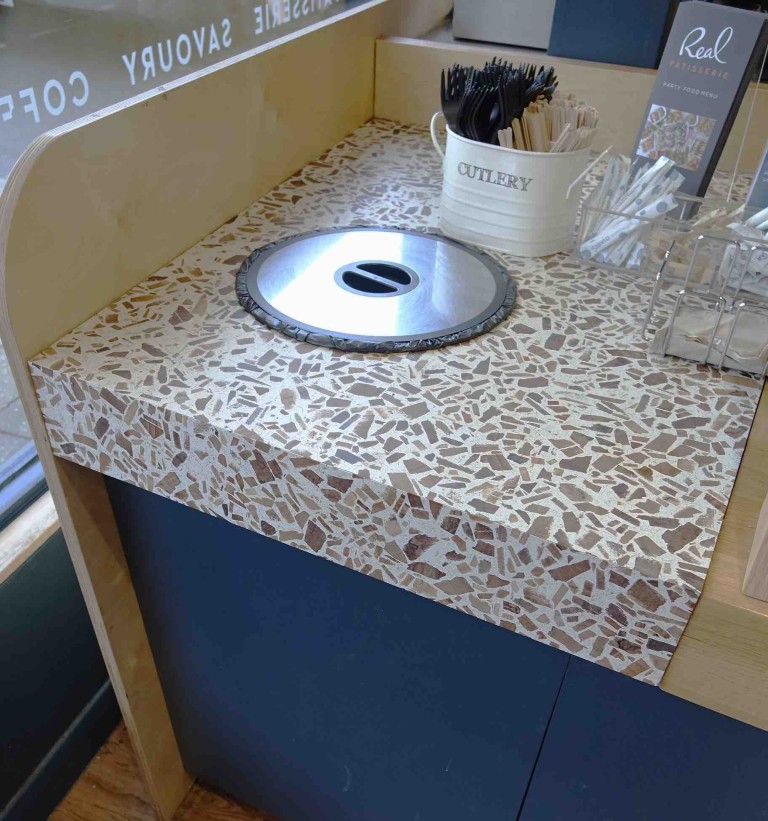
I used Foresso timber terrazzo board as a decorative finish. A single sheet of ‘Bianco’ was used sparingly where most seen.
- Made with recycled timber, in this case with London plane chips collected from the Birmingham city council maintenance department, local sawmills, or building sites sourced close to the factory - and produced with100% renewable energy.
- The binder is a bio-resin: non-toxic and formaldehyde-free.
- Closed loop product. At end of life Foresso can be returned - where it’s repaired and reused to its most valuable form possible - or sold as seconds - or at worst, reground and recast as new sheets.
- Foresso represented 25% of the timber cost used in the project - sourced from their factory 167miles / 269km away
Circular supplies
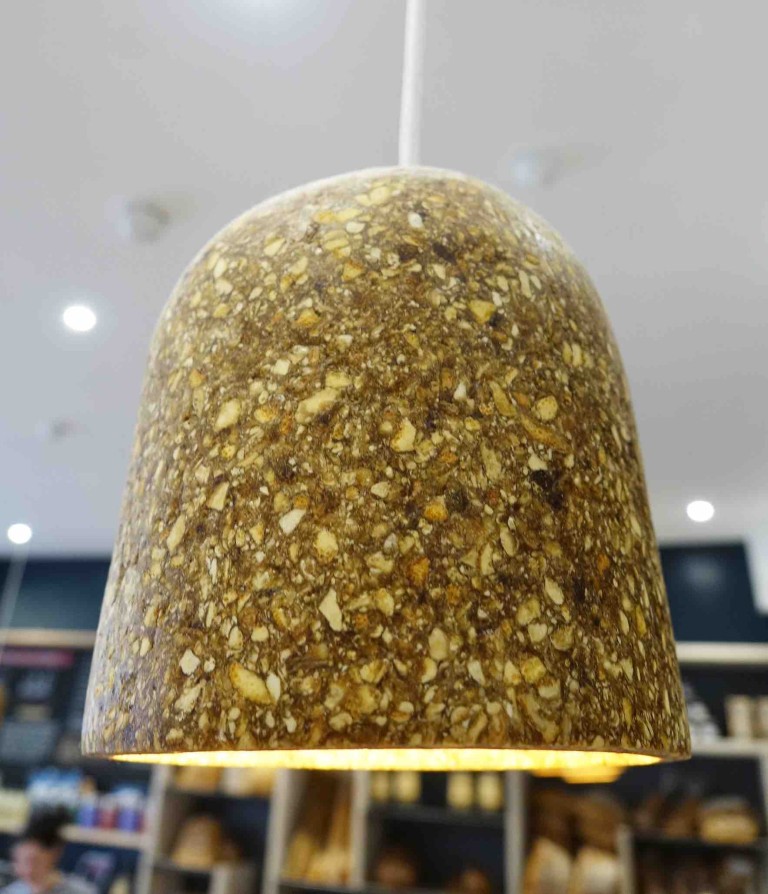
Feature lighting pendants were added, made by the innovative Finish studio Caracara Collective who use biowaste to create products.
- These ‘Reclaim Collection’ pendant lampshades from their Food Waste Collection are made from orange peels collected from local supermarket orange juice machines. This feedstock is part of the biological loop system
- Each shade is 100% natural and non-toxic - and uses 20 squeezed oranges. A nice ingredient story link to the food sold in the patisserie.
- Their range includes other organic food waste leftovers such as other fruit, vegetable peels and egg shells
- Whilst not locally sourced - the pendants fit within the Living Building Challenge ‘Living economy sourcing’ radius of 25% within 5,000 km.
- New high stools were FSC certified.
- The remainder of the timber used was from low risk sources.
Sharing platforms
Many of the unwanted elements from the previous shopfit were rehomed using online platform ‘Freegle’. The website enables free giving and receiving of items via local communities, primarily run by volunteers. Whilst not connected to the retail design - operationally, the company uses sharing platform app ‘Too Good To Go’ as one of their methods to ensure there’s no food waste. Bags of ‘end of day food’ are purchased on the app and collected as the shop is closing. Any uncollected and spoiled food waste remaining in the shop is composed.
Product As A Service
Equipment and appliances including the barista coffee machine and kit were rented rather than purchased.
Key Points
- Shopfront reused - existing door position worked well with customer flow
- Shopfront canopy sourced from a local independent company was added for shading for the comfort of occupants - and to reduce heat gain of this South facing shopfront glazing - reducing the energy load of the air conditioning
- A larger entrance mat was added to prevent particulate matter from being brought into the shop interior
- Flooring was reused and made to work with the design by using mixed timbers in the Foresso board to tie in the various species
- Use of Foresso recycled timber board used decoratively throughout - counter, display units and table top. Off cuts were saved to be reused
- Refrigerated display units reused (huge cost saving)
- Existing lighting reused - with additional 100% low energy lighting added (large cost saving)
- Joinery and cladding in reclaimed timber and FSC certified timber
- Caracarra Collective waste orange peel lamp shades
- FSC certified timber stools
- Office space was brought closer to retail area for better visibility of daily shop operations to benefit from daylight and better interactions
- Nature connection - maximised daylight, use of textured timber grain and air purifying plants added to non food areas
- Whist certification wasn’t sought - many of the LBC requirements were met. This project was happening during Materialise Interiors B Corp certification.
- Handprinting - Materialise Interiors planted 50 trees at the beginning and end of the project, preserved Amazonian rainforest (1 tonne CO₂e avoided) and donated wind energy (1 tonne CO₂e avoided).
RESOURCES
- Ellen MacArthur Foundation:
Introduction
https://www.ellenmacarthurfoundation.org/topics/circular-economy-introduction/overview
Built Environment
https://www.ellenmacarthurfoundation.org/explore?sortBy=dateDesc&topics=BuiltEnvironment - Cradle to Cradle Products Innovation Institute circularity and material health guidance
- Living Building Challenge - certification program promoting regenerative design in the built environment
https://living-future.org/lbc/ - B Corp - measuring social and environmental impact for businesses
https://www.bcorporation.net/en-us/
Picture credits: Jamie Lau, Real Patisserie