
Circular Economy
Circular Economy
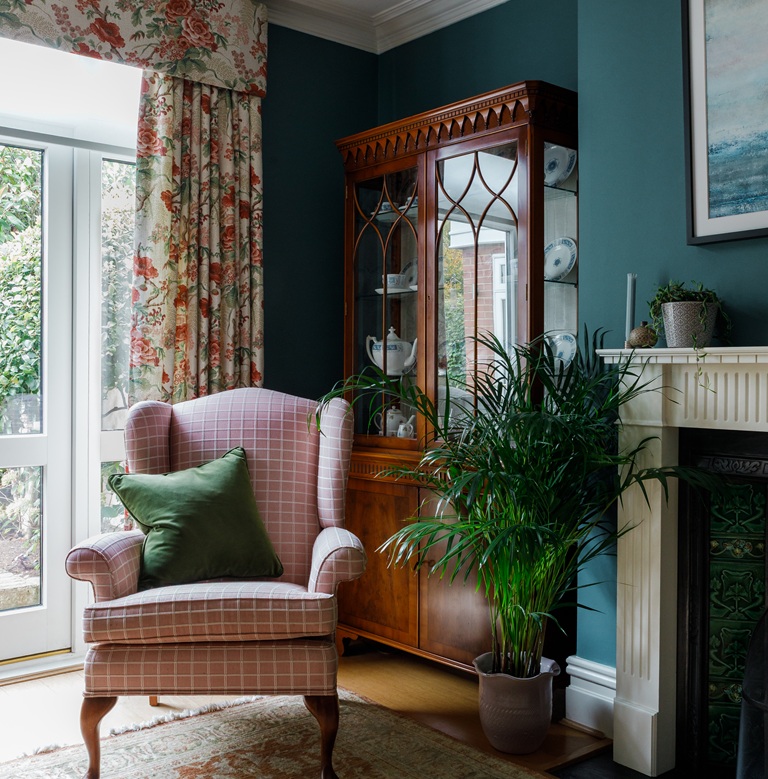
The circular economy is a regenerative design framework that seeks to eliminate waste by keeping products, materials and resources in continuous use while supporting the restoration of natural systems. Unlike the traditional linear model of 'take, make, dispose', it considers the full lifecycle of the built environment through strategies such as designing for longevity, adaptability, maintenance, repair, reuse, refurbishment and, ultimately, recycling. By adopting circular principles, interior designers can help reduce resource consumption, minimise embodied carbon and waste, and contribute to a more resilient and sustainable built environment.
Three Key Principles
- Eliminate Waste & Pollution
- Circulate Products & Materials
- Regenerate nature
Facts
- The built environment is responsible for around 40% of global carbon emissions and is one of the largest contributors to climate change (source).
- Construction, demolition and excavation activities generated 66% of England’s total waste in 2024, making the sector the largest source of waste by volume (source).
- Nearly 22 million small items of furniture are discarded each year in the UK when they become damaged (source).
- Around 700,000 tonnes of furniture are collected as waste by UK local authorities each year. Despite significant potential for reuse and repair, large quantities of usable furniture continue to enter the waste stream (source).
- Decisions made at the earliest stages of design have the greatest influence over a project’s embodied and whole-life carbon impact. Early consideration of material use, adaptability, flexibility, reuse and disassembly can therefore significantly reduce environmental impacts across a building’s lifecycle (source).
- Applying circular economy principles to the built environment could reduce global CO₂ emissions from building materials by 38% by 2050, through reduced demand for steel, aluminium, cement and plastic (source).
The Circular Economy is an umbrella term that covers many different models. Five models are listed below:
1. Product Life Extension
Designing For Longevity
One of the most important principles of the circular economy is extending the lifespan of products and materials. Rather than specifying items that are likely to be replaced within a few years, designers can prioritise durability, timeless aesthetics and high-quality construction. This approach encourages investment in products that can be repaired, refurbished or adapted over time. A well-designed interior should be able to evolve with changing client needs without requiring a complete refurbishment.
Reuse, Refurbish and Repurpose
The most sustainable product or space is one that already exists. Before specifying new materials, designers should assess opportunities to retain and repurpose existing elements within a project. Existing joinery, furniture, lighting and architectural features can often be refurbished, reupholstered or reconfigured. This not only reduces waste but can also preserve character and create unique design outcomes.
Key Points
- Physical durability: Combining material choices and construction methods that resist damage over long periods of time, creating highly durable products
- Emotional durability: Avoid trend-led specifications with short life cycles
- Design flexible spaces that can adapt to future change and needs
- Consider maintenance requirements at the specification stage
- Reuse or reinvent existing products as part of your schemes
- Look to incorporate vintage or upcycled pieces within your projects
- Design with future disassembly in mind
2. Resource Recovery
Waste
The construction industry accounts for a significant proportion of the world’s waste, generating about one-third of it annually. The extraction and transportation of approximately 100 billion tonnes of raw materials going into the construction sector contributes to biodiversity loss and resource depletion. Additionally, a considerable proportion of these extracted resources eventually ends up as waste, further intensifying environmental impacts. ‘Monstrous hybrid’ is the term for a complex or permanent fixed group of materials that cannot be disassembled - therefore have no high value opportunities for reuse.
Material Lifecycle
Post-Consumer Material – Recycled material recovered after it has been used by the end user, such as recycled plastic bottles, cardboard packaging or electronic waste.
Pre-Consumer Material – Material diverted from the manufacturing process before reaching the consumer, such as fabric offcuts, timber waste or production by-products. This excludes materials that are simply reused within the same manufacturing process.
Key Points
- Waste reduction If your project is a new build, ensure there is a waste plan set up and that all project parties are committed to reducing waste. If it is a refurbishment/fit-out project, can an audit be carried out on site to begin with to understand what materials and furniture are in the building that could be re-used/ repurposed.
- Circular economy suppliers Look at working with sustainable suppliers who can recycle/repurpose materials and furniture into upcycled furniture or kitchens, and who use circular economy processes.
- Develop strong designs that utilise the materials to reduce waste and will stand the test of time - avoiding things being ripped out and replaced quickly.
- 'Monstrous hybrids' Avoid composite materials that are difficult to separate and recycle.
- Packaging reduction or reuse When specifying FF&E items, investigate the packaging that items will come delivered in.
- Calculate accurately Only order the right number of items.
- Segregate waste Use a skip for proper segregation and ensure the company collecting is sorting waste properly - recycling where possible.
- Duty of care legislation Ensure the waste carrier is licensed - check the register here.
- Measure the amount of waste on your project and monitor throughout.
- Waste stream exchanges join a trading system with other organisations where ‘waste’ materials are listed and passed on to keep materials in use.
- Energy recovery waste streams of no high value can be directed to energy recovery.
3. Circular Supplies
Materiality
Truly natural, non-oil derived and regenerative materials - or recyclable materials fit with the definition of Circular Supplies. Material choices play a critical role in supporting a circular economy. Designers should consider not only aesthetics and performance but also the environmental impact of sourcing, manufacturing and end-of-life disposal. Preference should be given to renewable, recycled and recyclable materials, as well as products supported by transparent environmental data. Understanding a material's full lifecycle helps inform more responsible specification decisions.
Material Health and Toxicity
When specifying products and materials, consider their impact on human health and the environment throughout their lifecycle. Check for harmful chemicals, VOC emissions and potential release of pollutants during use, maintenance or disposal. Prioritise products with transparent ingredient information, low-emission certifications such as Greenguard and healthier alternatives where available. Consider guidance from standards including the WELL Building Standard, Fitwel and Building Biology to support healthier interior environments.
Key points
- Choose non toxic materials, preferably biomaterials that can be re-used in the future or will biodegrade. Be aware that some materials cannot be broken down in the environment and will need specific treatment
- Circular supplies: Specify accredited sustainably sourced natural materials or those with recycled content
- Third party certification: Choose products with recognised environmental certifications.
- Go local: Consider local sourcing to reduce transport impacts
4. Sharing Platforms
Sharing platforms challenge the concept of ownership. Can products, spaces - or services (and other assets) be shared access? These sharing platforms have the potential to minimises resource waste and instead utilises libraries (physical or online). Underused spaces can be shared or be designed for multiple uses to make them their most useful.
5. Product as a Service
Here the model is to pay for use rather than for ownership. Businesses retain the ownership of a product - but sell the use or function of it - and provide servicing whilst being used. In the interior design industry this could include renting appliances including white goods, equipment or even illumination.
Resources
- Ellen MacArthur Foundation
Circular economy:: http://www.ellenmacarthurfoundation.org/topics/circular-economy-introduction/overview
EMF intro video: https://youtu.be/zCRKvDyyHmI?is=6kjrLqhLXWg5gbXH - UK Green Building Council (UKGBC): https://ukgbc.org/
- Circular Economy Institute Circular Economy Institute: https://ceinstitute.org/
- Royal Institute of British Architects (RIBA) Sustainable Outcomes Guide RIBA Sustainable outcomes guide: https://www.riba.org/work/insights-and-resources/sustainable-outcomes-guide/
- WRAP (Waste & Resources Action Programme): https://wrap.ngo/
- Circular economy: https://ceinstitute.org/
- Introduction to Passivhaus: https://biid.org.uk/introduction-passivhaus
- Ethical sourcing: https://biid.org.uk/quickfire-series-ethical-sourcing
- Disposing of POP waste: https://biid.org.uk/resources/disposing-pop-waste-what-interior-designers-should-know
- Circular Economy hub: https://circulareconomyhub.lovable.app/hub
- EMF Video: https://youtu.be/zCRKvDyyHmI?is=6kjrLqhLXWg5gbXH