
Water
Water
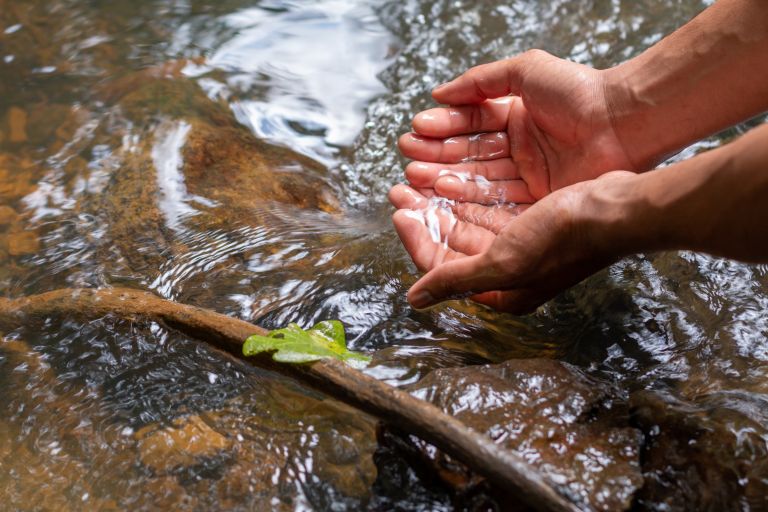
Water is an overlooked resource in sustainable specifying. Embodied water in textiles, timber and other materials, but rarely water itself — despite it being the one resource our buildings, occupants and ecosystems cannot function without. As UK water stress intensifies and AI-driven data infrastructure adds new demand on top of it, water needs to be considered alongside carbon in our specification decisions..
Facts
- A single leaking WC can waste 200 litres of water a day — up to 1,500 litres if flowing continuously — costing owners £100–£700 a year, per toilet, in mains (not recycled) water. SOURCE: WaterWise
- The UK water industry emits around 3 million tonnes of greenhouse gases a year, largely through the energy used to move and treat water. It committed in 2020 to reach net zero by 2030, twenty years ahead of the national target.
- UK data centres are estimated to use nearly 10 billion litres of water annually; a single 100MW facility can use as much as roughly 80,000 people.
- During the 2022 drought, salmon migrating up the River Itchen fell from around 800 to roughly 100 — a stark illustration of how low flows threaten protected species.
- The UK faces a projected water supply gap of 6 billion litres a day by 2050 SOURCE: Environment Agency / National Framework for Water Resources modelling
Key Points
Water-sensitive and resilient design
Water sensitive design can help minimise water consumption. Specifying low-flow taps, dual-flush WCs and water-saving showerheads reduces indoor demand significantly. Designing in greywater recycling can repurpose water from sinks, showers and laundry for irrigation or flushing. Rainwater harvesting — through rooftop collection or permeable surfaces — captures water for reuse and eases reliance on mains supply.
In terms of landscaping, it is likely that hosepipe bans will happen more frequently in the future. By specifying drought-tolerant, free-draining planting schemes over high-maintenance, irrigation-dependent ones landscapes can be more future proofed. In addition rain gardens and rainwater storage can be designed in so landscaping captures water for watering and irrigation. Improved soil structure can do as much for water retention as plant choice.
Water and energy consumption are closely linked
Particularly where hot water is concerned, so reducing water use also reduces energy demand. Low-flow fittings, aerators, efficient showerheads and smart monitoring or leak-detection technologies all cut waste without compromising user experience.
Embodied water
Some materials, such as uncertified cotton, require significant water during production, so material choice is itself a water decision.
Design for flood resilience
As climate patterns shift, we need to design for flood resilience as much as efficiency: flood-resilient flooring, elevated detailing, smart leak-detection and passive cooling all reduce a building's exposure to both water scarcity and water excess.
Leaking WCs
Are a common issue, in homes and workplaces. A trickle leak can be as hard to detect as it is wasteful — a sheet of toilet paper left in the bowl will reveal it. The fix is usually simple: a new flush valve, fill valve or rubber seal - saving hundreds of litres of water a day, per toilet.
Water and artificial intelligence
- Every AI query relies on data centres that use water directly for cooling and indirectly through the electricity that powers them; estimates for a single query range from under 1ml to 50ml, but it's the aggregate that matters
- UK data centres already draw close to 10 billion litres a year, and some water companies have objected to proposed developments in already water-stressed regions.
- We increasingly turn to AI tools for rendering, research and specification, this is a resource footprint worth being conscious of, even where it's indirect and hard to quantify precisely.
Water saving specifications
Specify low-flow fittings, dual-flush WCs and leak-detection technology as standard, not as an add-on. Consider rainwater harvesting and greywater reuse at design stage, particularly for landscaping and non-potable uses.
Flag leak risk to clients
A small, cheap fix can save hundreds of pounds a year and significant mains water.
Water use in production
Treat embodied water (in textiles, materials, and now digital tools) as part of a project's total water footprint.
Biodiversity loss
Water scarcity, flooding and biodiversity loss are connected — designing for one supports the others.
Resources
- Waterwise: waterwise.org:
How to Save Water: https://waterwise.org.uk/how-to-save-water
Water Calculator: https://waterwise.org.uk/water-calculator
The Hidden Connection Between Your Water Use and Wildlife: https://waterwise.org.uk/the-hidden-connection-between-your-water-use-and-wildlife/ - edie: Water Management for a Net-Zero Economy — From Risk to Resilience
- Water Literacy Programme: Additional Resource Pack: https://waterliteracy.uk/app/uploads/2025/12/Water-Literacy-Programme-Additional-Resource-Pack-UPDATE.pdf%C2%A0
- Centre for Alternative Technology (CAT) ‘Reusing Rainwater and Greywater’: https://cat.org.uk/info-resources/free-information-service/water-and-sanitation/rain-and-grey-water/%C2%A0