
Behind The VIP Lounge With Tolu Adèkó
In part one of this two part series, we spoke with Tolu Adèkó about the process of designing spaces for industry events
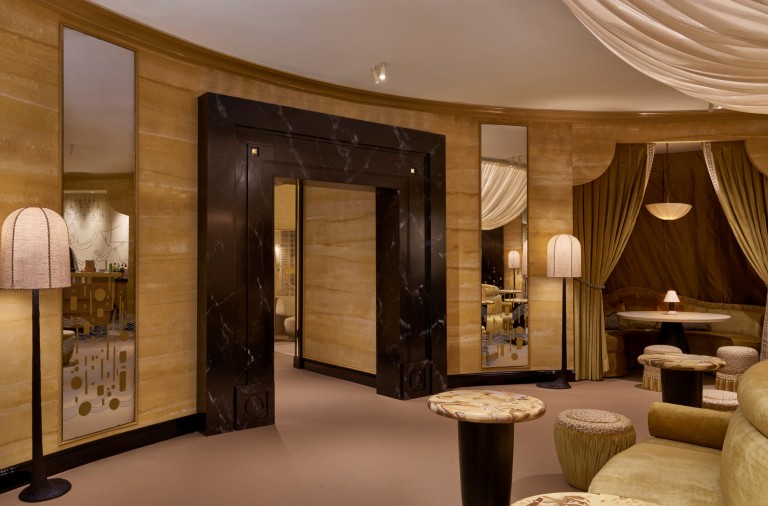
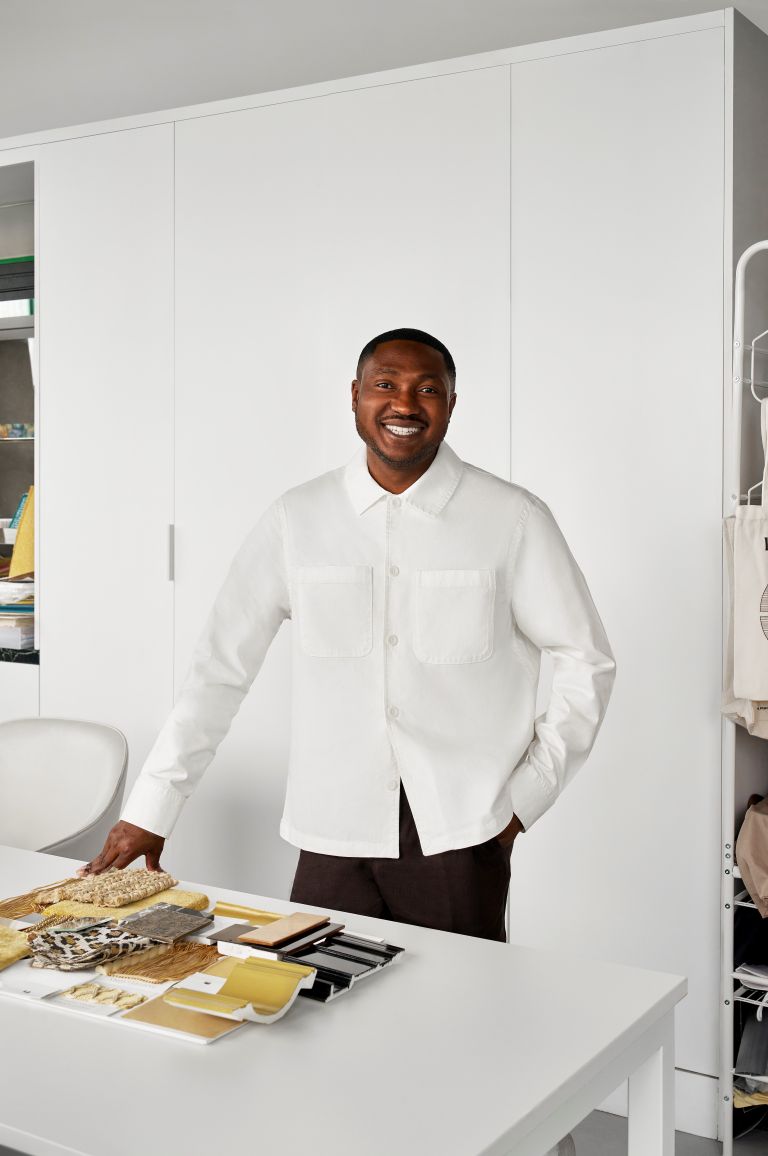
Tolu Adèkó is founder of Adèkó & Co, a multi-disciplinary design Studio based in London with specialisms in hospitality, cruise and luxury residential projects. He has designed spaces for exhibitions including a luxurious bedroom for WOW!house 2024 at the Design Centre. Here he reveals the process behind his design and install of the VIP Lounge for Decorex 2025 at Olympia.
Tell us about the design process
The VIP Lounge was an expansive space and a wonderful opportunity to be involved in. We were approached in autumn 2024, proposed our design concept by January 2025 and worked from that date until the opening in October for the four day exhibition. (For comparison, Adèkó & Co’s work on WOW!house was confined to 12 weeks from first conversation to install.)
When creating any space, I believe it is important to create pockets of experience within it…whether that be a large restaurant or a two-metre square bar. Within a project, every single area should have its own identity yet combine to form a coherent whole. I like to focus upon a narrative and consider the right story for the right audience: for the VIP Lounge I discovered Olympia historically held many circus-style events including the Bertram Mills circus for over 50 years. I took this as inspiration for the floorplan and tented feel.
Circular shapes are so interesting for layout: they have no sharp corners and offer a good space for social interaction and circulation. I looked at dome-centred plans with adjacent rooms and designed the VIP Lounge with a circular centre point but extended this with four rooms to subdivide the space with areas to eat, to hold meetings or to take a quiet break.
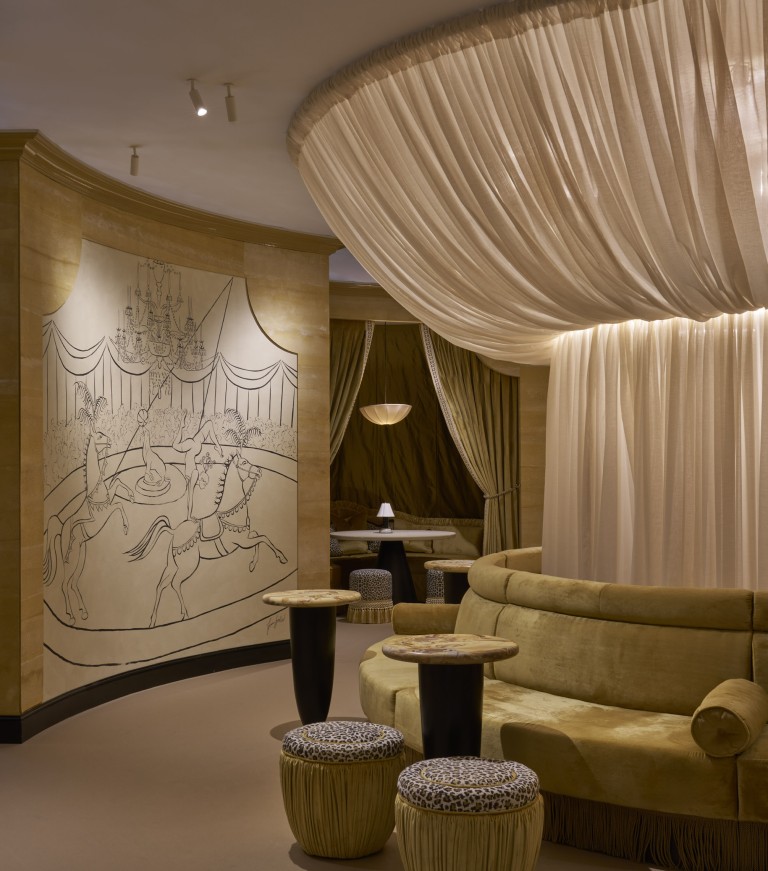
One large space can end up being very noisy acoustically and I designed a series of spaces with nooks and niches to create a strong sense of intimacy and a memorable finish in terms of look, layout, lighting, scent and so on. In my hospitality projects, such as for Intercontinental, I always work with a sound designer and a lighting designer and regularly also work on scent with the team at Jo Malone, combining some of their existing scents to create a fresh new smell.
Orchestrating a setting is something that is very calculated… very intentional in our approach. Some people can be so focussed on solving a layout or stylistic problem that they forget the elements that create the experience in the design.
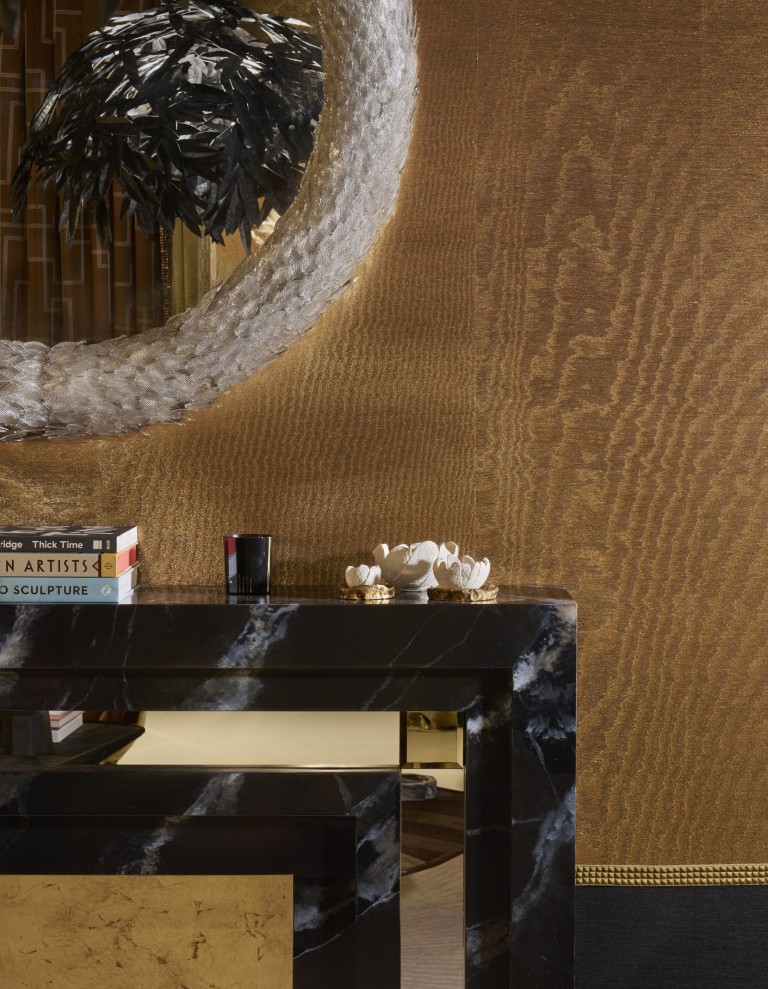
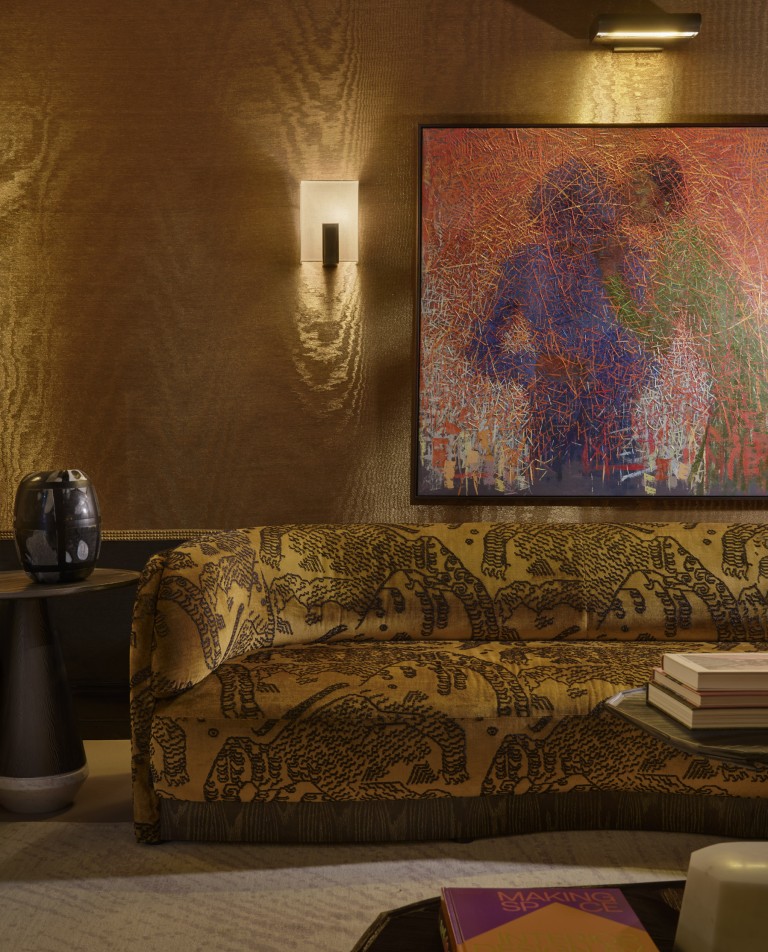
I worked with many craftspeople to use their mediums in a totally different environment. Some created faux marbling, which involved lining the stand with canvas and wrapping it in bespoke hand painted wallpaper, others created embroideries to a very different scale, others created a tapestry for the ceiling. Giving artisans the freedom and the challenge to create the most exciting brief really enriches my projects. Working collaboratively and being receptive to the amazing wisdoms, skills and talents of specialists is the backbone to our business.
We were also delighted to collaborate with 40 brands drawn from our network.
What is the build and install process like on events?
Most stands at Decorex are erected in two days and removed in half that time. So the challenge is to make visitors feel that they are in a permanent space.
Adding architectural elements like cornices and skirting was important to make it feel like the setting had existed for some time. As a designer who creates luxury and high end interiors, I had to consider how to achieve that same effect while working to a limited budget and taking a sustainable approach for disassembly.
The biggest challenge was to form the large circular shape at the centre: just six weeks before the contractor was appointed we discovered the stand would unexpectedly have to have additional columns for structural rigidity. We hadn’t been aware of at the beginning. Supporting the fabric awning to the front of the set was also a challenge because it involved over 100kg weight of curtaining which required three people to lift it and lots of stand reinforcement to keep the track stable. But you wouldn’t have known from the end result.
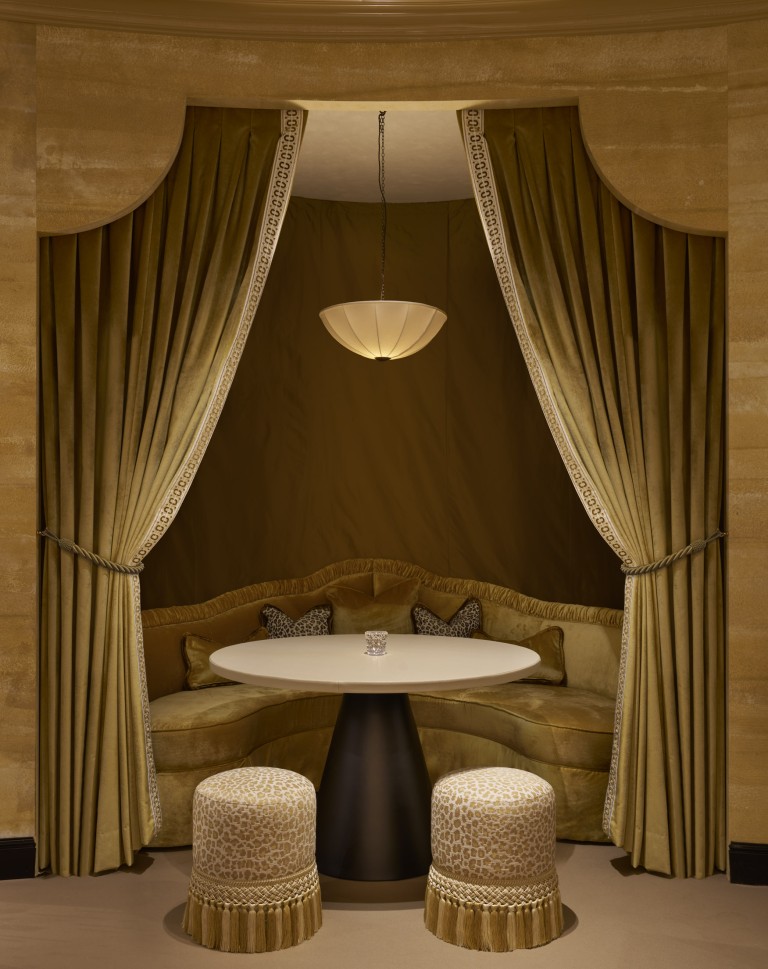
Adèkó & Co Studio creates highly detailed and prescriptive drawings for all our projects and our project managers and contractors are used to working with that level of detail. It’s important to be aware that exhibition contractors are used to working at speed and perhaps not used to working with that level of detail. Even when you simplify the drawings and add many annotations, you will still need many eyes on site because the install happens very fast and its challenging to keep abreast of every fixture and fitting.
Additionally, you need to be prepared for unexpected setbacks. The company that was supplying 300 metres of velvet curtaining, including trimmings, was taken into administration just 10 days before the install so that required us to get involved and appeal to the administrators so that we could rescue the fabric from the liquidation process and find another company to make the items.. It’s at times like these that years of strong working relationships with suppliers comes to the fore for emergency help.
And how does breakdown work?
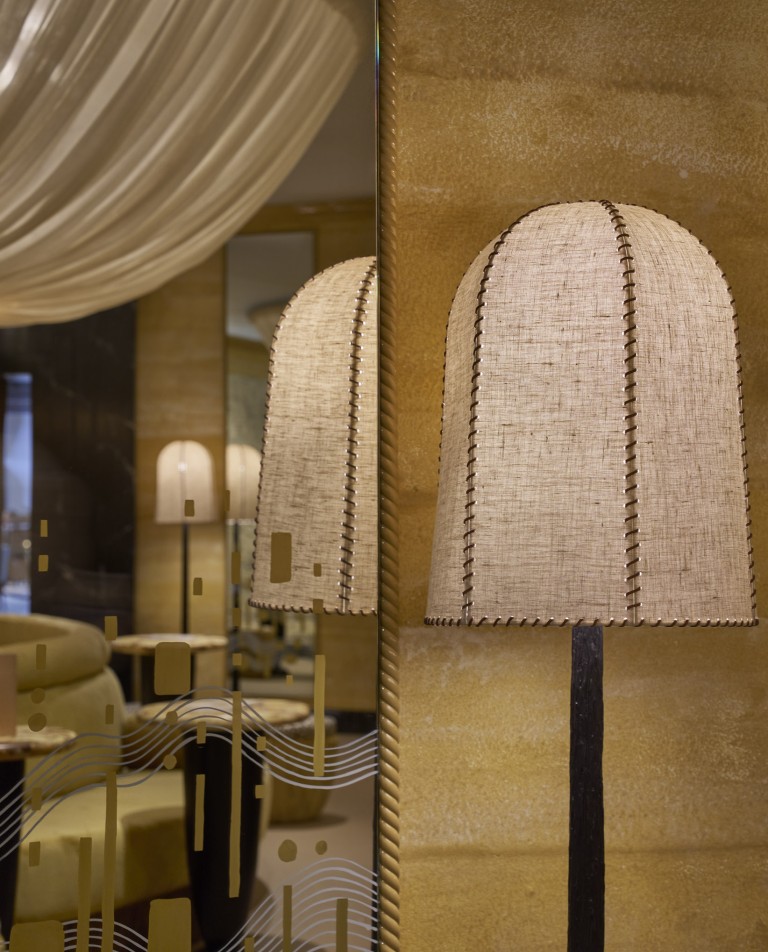
It’s vital to pre plan what will happen to each piece at breakdown. 90 % of the products were designed specifically for the space including chairs, banquettes, and lighting. We planned to return many samples and prototypes to our collaborative partners, the curtains were donated to a theatre school in Peckham for their stage and other donations were also made to the charity Furnishing Futures. Leaving fabrics at full length and minimising cuts in materials means maximum opportunity for reuse afterwards. (In the bedroom at WOW!house, I used full-height fabric-covered wall panels velcroed in place, for this reason.)
What did you get from taking part?
Opportunities like these give you a fantastic avenue to express yourself fully, explore your imagination and really showcase your capabilities. A designer’s creativity is often tied to a brief (as well as a budget).. which is not, of course, a negative.. but doesn’t allow full artistic expression. You can’t immediately define the benefits of creating a stand in terms of profile or client commissions but if done well –and captured well – you will see returns over the years. I’m working on a project in Marrakech that is a result of a client seeing a Pinterest photograph from WOW!house.
Exploring the new WELL Interiors designation with IWBI Senior Vice President Ann Marie Aguilar
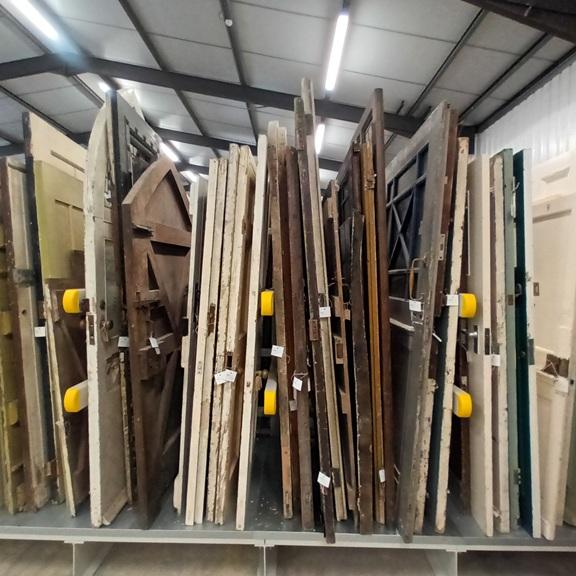
The Brooking Collection brings together architectural features spanning five centuries of British design and craftsmanship, from historic windows and doors to staircases and decorative ironwork.

We're looking for BIID Registered Interior Designer® to volunteer as mentors for our Student Design Challenge this November
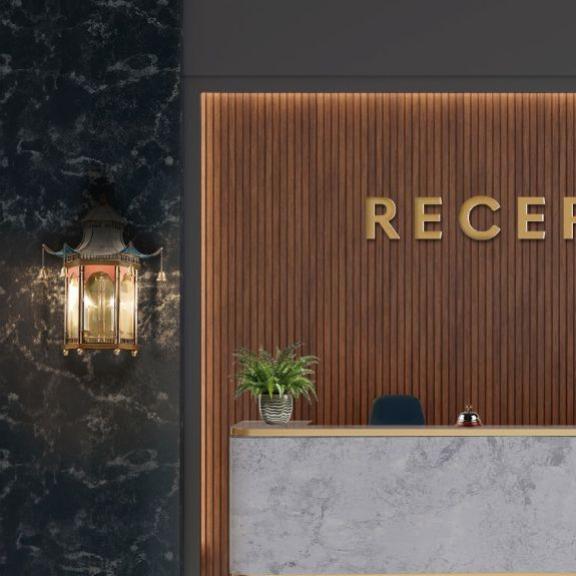
Mark Lissauer of Christopher Hyde Lighting on the enduring appeal of classic lighting
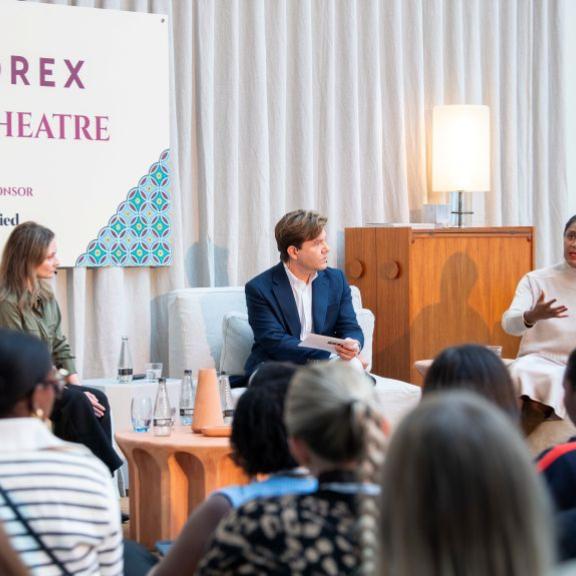
Sam Fisher, Event Director of Decorex, explains what visitors can expect at this year’s show
Practical guidance to support more responsible choices across the design and construction industries