
Outstanding Stands With Henry Prideaux
In part two of this two part series, we spoke with Henry Prideaux and got his advice on standout events spaces
Henry Prideaux’s independent practice in London creates timeless residential and boutique commercial spaces with a modern twist. He has designed stands at Decorex, a showroom space for Christopher Farr and a luxury kitchen – in collaboration with Martin Moore – for WOW!house at Design Centre Chelsea Harbour. Here, he discusses his insight and best advice for designing roomsets.
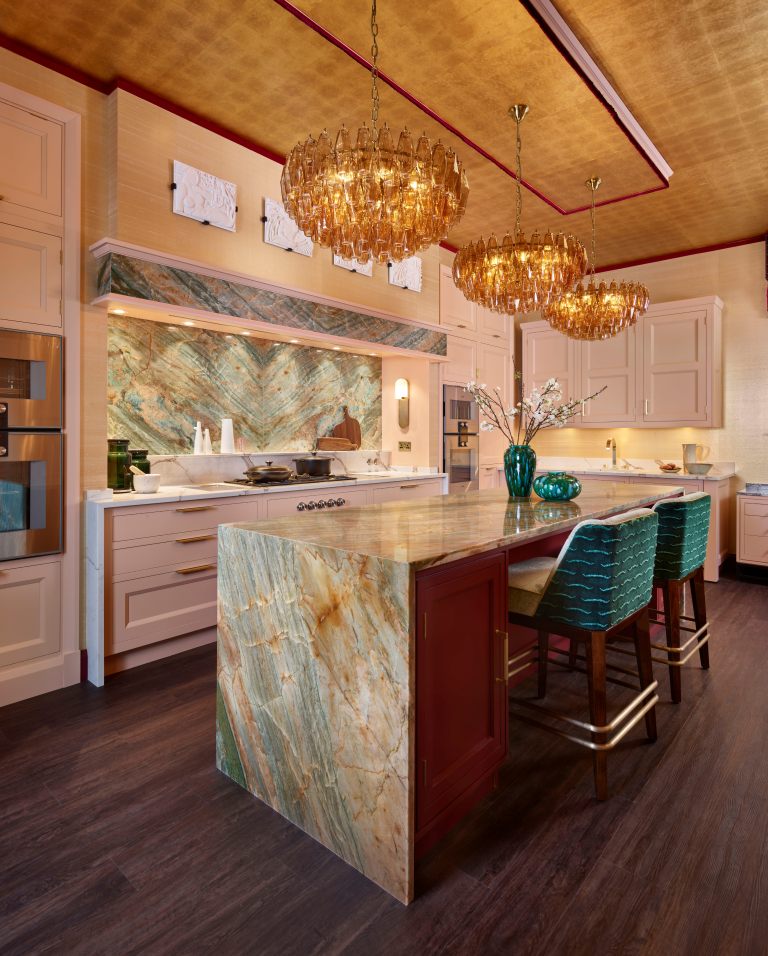 Creating a stand requires designing an environment and setting a mood that stops people in their tracks and invites them into the space to engage with a brand. Your approach slightly depends on whether you are creating a room set or displaying a product range. Businesses are increasingly seeing the value of having an independent interior designer bring a different eye to the way their brand is represented. My aim is always to minimise the cost and maximise the exposure for everyone involved.
Practical constraints
An exhibition stand often comes with pre-set dimensions with size and location dependant on budget. It might be a three-sided rectangle, a square or a corner unit which only has two walls, so as a designer when you come on board to the project your spatial parameters are governed from the start.
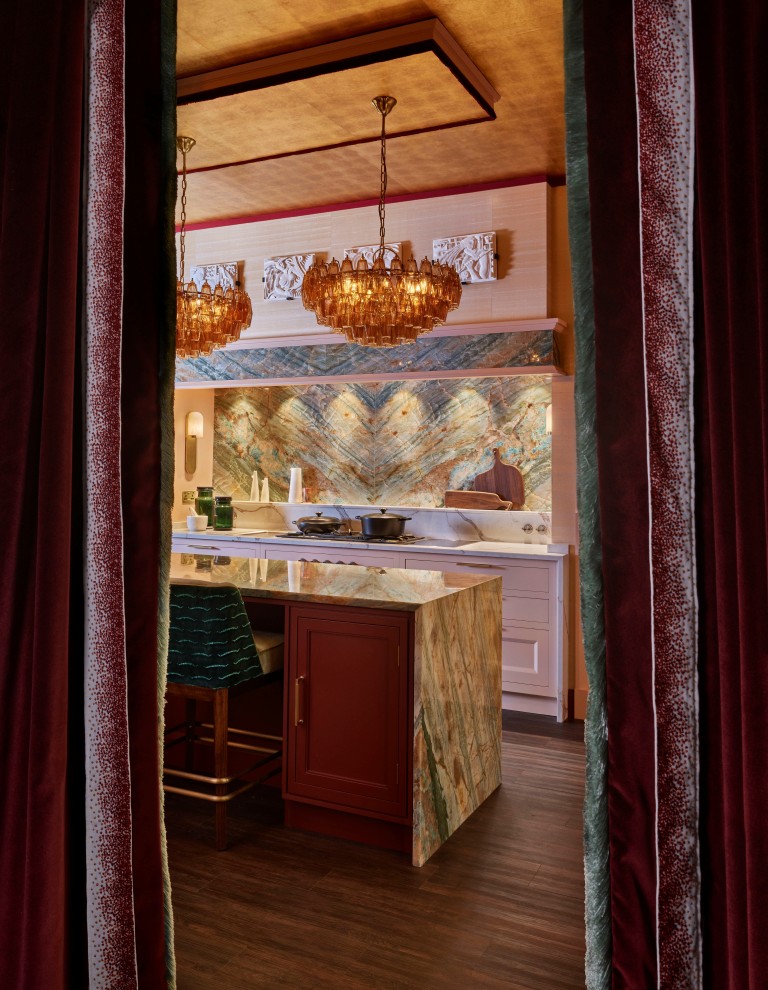
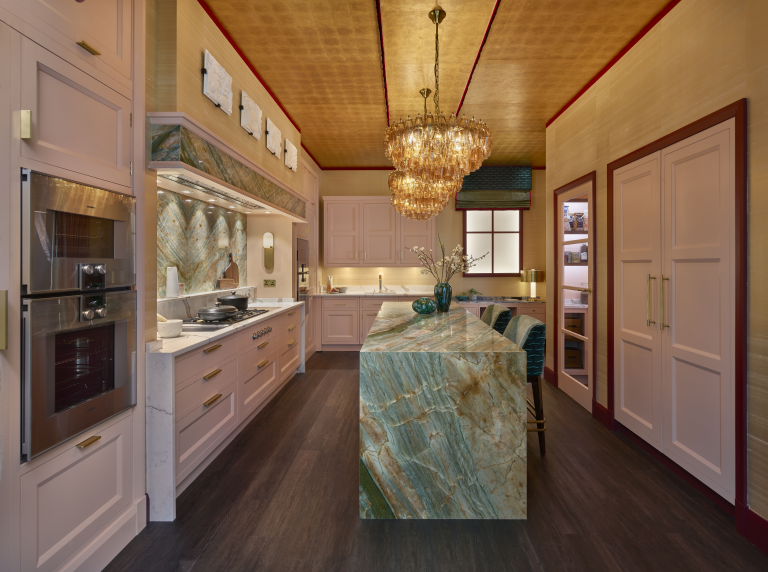
The first key thing to recognise is that temporary set structures may be flimsy; you will not have the luxury of solid walls, nor surfaces solid enough to fix anything of any weight to. At WOW!House (at Design Centre Chelsea Harbour) for example, where I was working with Martin Moore to create a luxury life-sized kitchen, it was necessary to build our own structure within the parameters of the show organisers room skin to provide the strength needed to hang units, and so on. This kind of practical necessity must be considered upfront long before the aesthetic style.

Support network
I would always advise securing your own contractors: this leads into budget and timing questions, of course.. Are your preferred contractors available for the relevant dates? Are they good at stand or set constructions? Will other brands be wanting to use them? In other words, are you going to find yourself sharing contractors during the set-up period?
At WOW!house, the wallpaper hanger I was using was also booked to do three other rooms but I had a degree of priority in terms of his programme during the installs because I had secured his services first.
Next consider carefully your supply relationships: who can you rely on and who can help you out of a pickle? You want to be partnering with a brand or brands that will support you with a commitment not only to provide product but to the logistics, the build - which could be up to four days - and breakdown and possibly staffing for the event.
At WOW!House, the room set will be in place for an entire month so the products you intend to use need to be guaranteed to remain onsite for the full duration.
Clear agreements
It is common to adopt a beg and borrow attitude to pulling everything together but this only works if you are committed to providing marketing incentives to promote partners and this all needs to be agreed in advance. I advise putting all commitments in writing, for example how many social media posts each party will commit to. Be wary of being beholden to brands you might not necessarily work with again and always weigh up the longer-term relationship.
Nurturing supplier relationships is also key to having a satisfactory outcome. The wallpaper hanger, the curtain maker, the bespoke upholsterer and the carpet layer I work with for stands and sets are the same people I work on with every permanent project: they know that they will be working with me for years to come and there is a two-way loyalty in this.
Plan, plan, plan
Whether I’m dealing with tens or hundreds of thousands of pounds for clients, I’m always mitigating risk by planning and programming for every stage of every project. The same applies with a stand, you have to plan, plan, plan.
I advise any designer taking on a stand to treat it exactly the same as a permanent project in terms of sourcing, sampling, designing, placing orders, sending cuttings out to the right people, and storing all the information in a fully organised system.
Be sure to pre-agree with partners who will pay for what, which products will be returned or donated, who will be responsible for transport and storage, not only products but for all the packaging held for the returns. Establish the entire process, for surety of who is going to be filling all the gaps and holes, supply the muscle and so on. I was very lucky to work with Martin Moore who had 12 fitters to come and fit the whole interior.. you wouldn’t get that with a normal kitchen or room set, so they were brilliant.
Installation time frames are very limited. At Decorex you may have 2-3 days, at WOW!House, we had four days to install which is really not long for a kitchen. Together with Martin Moore we designed the kitchen so that after the event it would later fit into a designated space in one of their showrooms to become a fresh display and also later be sold to an end user. From a sustainability perspective this meant that, with careful forward planning, the kitchen had three incarnations of use.
Outcomes
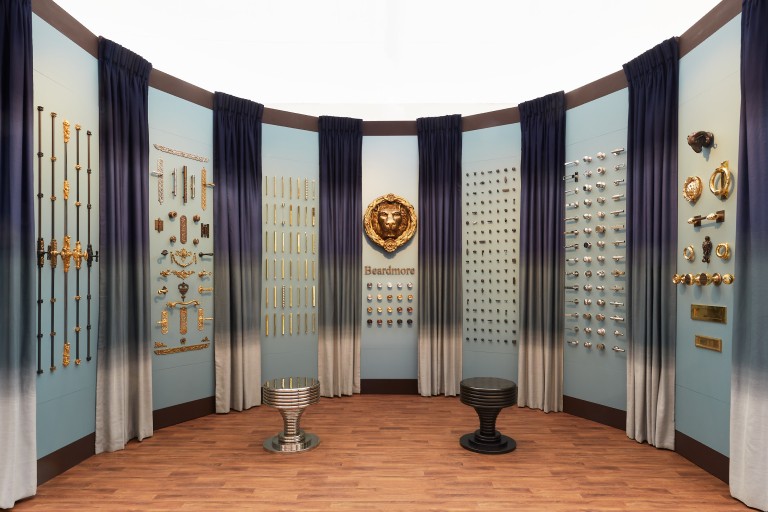
Exhibitions and events are quite industry focussed so they won’t necessarily lead directly to a new client viewing your work and progressing to a commission. However it is a great opportunity for getting your name noticed and also pushes you slightly out of your comfort zone. At Decorex, the second stand we did for Beardmore won Best Stand which was a fantastic accolade and at Wow!House an existing client admired the kitchen and wanted to do something equally impressive and ambitious for their own renovation.
Editorial coverage seems to grow with each year but it’s wise to recognise that it is difficult for a magazine to cover sets and stands in their publications – especially retrospectively – so you have to maximise profile and exposure opportunities during the event yourself. The more brands you work with the wider your potential cumulative reach
At the end of the exhibition you want to ensure you are remembered for all the right reasons. The impact of creating a good room and a bad room is the same but at opposite ends of the spectrum so it’s really important to go the extra mile and consider ways to dial up every element and then dial it up again!
Exploring the new WELL Interiors designation with IWBI Senior Vice President Ann Marie Aguilar
The Brooking Collection brings together architectural features spanning five centuries of British design and craftsmanship, from historic windows and doors to staircases and decorative ironwork.

We're looking for BIID Registered Interior Designer® to volunteer as mentors for our Student Design Challenge this November
Mark Lissauer of Christopher Hyde Lighting on the enduring appeal of classic lighting
Sam Fisher, Event Director of Decorex, explains what visitors can expect at this year’s show

Practical guidance to support more responsible choices across the design and construction industries