
A Designers Guide To Sustainability In The Flooring Sector
We spoke with Cathie Clarke at the UKSFA about the landscape of sustainability in the flooring sector

Sustainability is no longer a side conversation in UK interiors - it’s now a crucial driving force.
Clients are asking tougher questions, regulations are tightening, and flooring - one of the largest material impacts in any project - is under growing scrutiny, according to the UK Sustainable Flooring Alliance (UKSFA).
As the conversation begins to shift from “What looks good?” to “What looks good and is responsible, circular and compliant?”, interior designers need clarity, consistency and confidence. We spoke with Cathie Clarke, CEO of the UKSFA, for further information.

What is UKSFA?
UKSFA is the only trade body in the UK representing sustainability practices in the flooring sector. Our membership currently covers circa. 80% of manufacturers who place textile flooring products on the UK market and resilient flooring manufacturer representation is significant and growing. UKSFA unites organisations across the entire flooring supply chain from manufacturers, contractors and recyclers to retailers and specifiers. As the recognised voice for the sector, it works with members, the UK Government and third-party stakeholders through advisory groups, special project working groups and wider industry engagement to educate, influence and support on all issues leading to a more sustainable flooring industry. UKSFA also develops best practice guidance and engages with policy makers to help shape policy that is grounded in real-world practice.
Setting the context
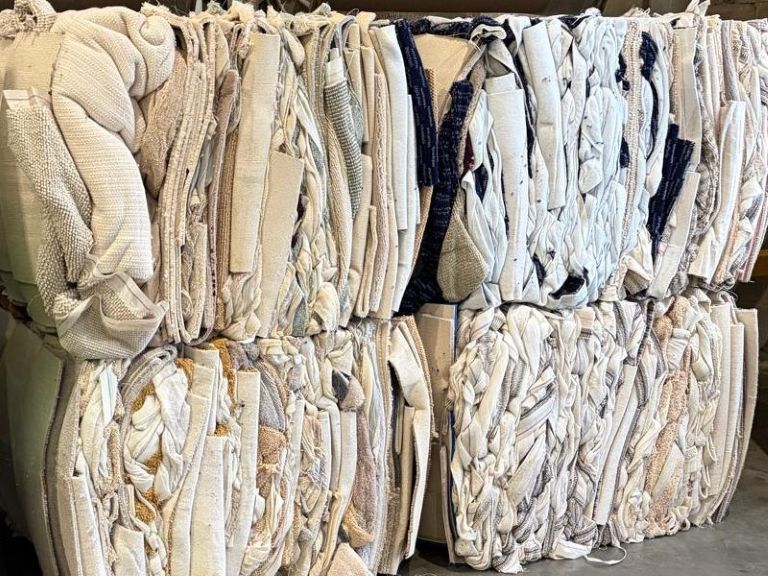
UKSFA began life in 2008 as Carpet Recycling UK (CRUK), established by textile flooring manufacturers concerned about the volume of carpet and rugs being sent to landfill. At that time, around 95 per cent of textile flooring waste was ending up in landfill. During the following years, the work of CRUK, its members, and the wider industry helped divert up to 75 per cent of this waste away from landfill.
However, diversion does not necessarily mean recycling. Actual recycling rates for flooring waste remain low, with much of the material undergoing ‘treatment’ instead. Significant proportions are now used for energy recovery or incineration.
For many years, the use of textile flooring waste in equine surfaces provided an alternative outlet, but this has declined sharply following the withdrawal of the Environment Agency’s Regulatory Position Statement 248.
New legislation
Across Europe and the UK, growing concerns around climate change and material security have driven tighter controls on waste, product manufacture and end-of-life responsibility. New legislation increasingly prioritises reuse and recycling over disposal.
Extended Producer Responsibility (EPR) has recently been introduced for packaging in the UK, requiring manufacturers to pay fees based on the packaging they place on the market. These fees are modulated, with lower charges for packaging that is recyclable or contains recycled content. The aim is to encourage better product design while generating funding for end-of-life waste management.
EPR for carpets was first proposed by the UK Government in 2018 and later expanded to include all flooring types except stone and marble. This expansion in 2024 was a key reason for CRUK’s transition to the UK Sustainable Flooring Alliance (UKSFA), enabling it to represent and support the wider flooring sector.
While EPR legislation for flooring is still some way off, other regulatory changes are more imminent. These include the revised Construction Products Regulation (CPR), which will introduce requirements for Life Cycle Assessments (LCAs), Environmental Product Declarations (EPDs) and Digital Product Passports (DPPs), alongside changes to the UK Emissions Trading Scheme (ETS) in January 2028. Together, these will contribute to rising disposal and treatment costs.
Although reuse and recycling options do exist in the UK, they currently account for less than 5 per cent of treated flooring waste. Increasing this figure will require improved product design, alongside targeted research and investment.
Product identification remains a major barrier, which is why UKSFA is working with members and industry partners through its Back Stamping Working Group to develop practical solutions.
Marking or stamping products is not straightforward. Installation methods - particularly the use of adhesives - can damage materials during uplift, limiting reuse potential. This means that installation techniques must be considered alongside product design if future reuse and recycling opportunities are to be maximised.
Efficient take-back systems are also critical. UKSFA is actively mapping the current take-back landscape and developing an enhanced online portal to help stakeholders identify and access resources across the UK by connecting existing flooring take-back schemes.
While UKSFA already maintains a register of reuse and recycling organisations, the new portal will significantly improve speed, visibility and accessibility for those seeking practical solutions.
Why collaboration matters
Collaboration is at the centre of UKSFA’s efforts to bring positive change. By working together, designers can lead the sustainability conversation with credibility and creativity. Flooring represents a major source of material use and waste in both residential and commercial interiors, and designers are increasingly being asked to understand;
• Which flooring types support reuse and recycling
• How take-back schemes work in practice
• What upcoming regulations mean for specification
• How design decisions affect disposal costs and future compliance
• How can flooring help to reduce the overall carbon calculations in buildings?
UKSFA exists to provide clear, evidence-led answers to these questions—reducing risk, uncertainty and guesswork.
What UKSFA offers designers
Collaborating with UKSFA gives interior designers access to early insight into regulatory and policy changes, practical guidance that’s evidence-led, not marketing-led, and a unified interpretation of sustainability standards. It also offers guidance to provide confidence that specifications will stand up to future legislation.
UKSFA is actively supporting the development of a UK-wide flooring take-back scheme, promoting existing real open and closed-loop circular solutions, and producing best-practice guidance for installation, removal and end-of-life management. The aim is simple: to bridge the gap between sustainability ambition and day-to-day project delivery.
As clients become more discerning and legislation tightens, designers who understand sustainability and circularity will be at a clear commercial advantage.

Join the conversation
For BIID members, sustainability challenges around flooring extend far beyond material selection. They can include demolition and strip-out works, installation methods, waste management on site, and uncertainty around end-of-life responsibility.
UKSFA exists to help designers navigate these challenges - providing practical, evidence-led guidance, clarity on emerging regulation, and support in making informed, future-proof design decisions.
For more information on the UKFSA’s work, visit www.uk-sfa.com. Sign up to our newsletter and follow us on LinkedIn.

Exploring the new WELL Interiors designation with IWBI Senior Vice President Ann Marie Aguilar
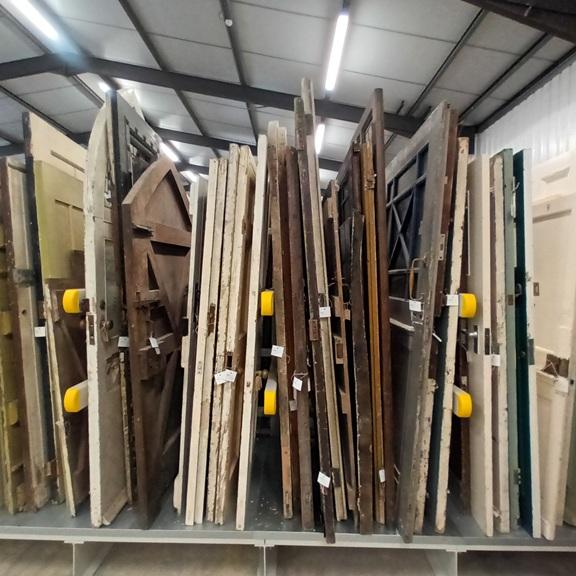
The Brooking Collection brings together architectural features spanning five centuries of British design and craftsmanship, from historic windows and doors to staircases and decorative ironwork.

We're looking for BIID Registered Interior Designer® to volunteer as mentors for our Student Design Challenge this November

Mark Lissauer of Christopher Hyde Lighting on the enduring appeal of classic lighting

Sam Fisher, Event Director of Decorex, explains what visitors can expect at this year’s show
Practical guidance to support more responsible choices across the design and construction industries