
Insights from a BIID Tour of a Rarely Viewed Palladian Mansion
We share some tour highlights
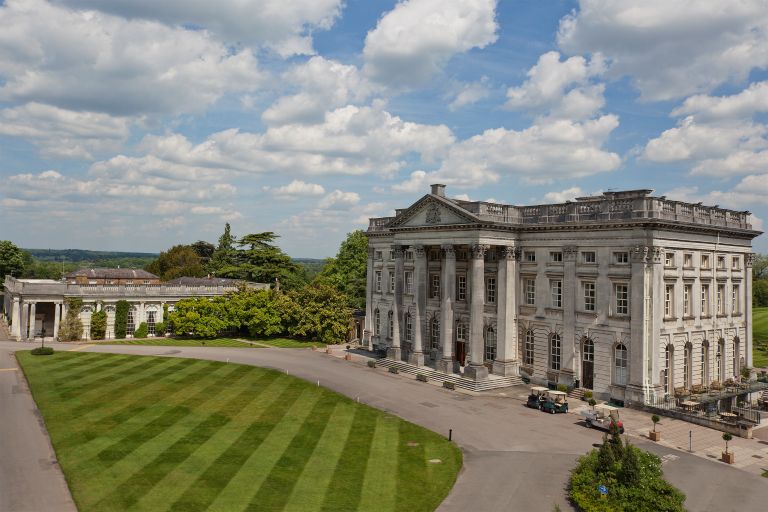
Rarely open to the public, Moor Park is a Grade I listed Palladian property located in Hertfordshire, described by Country Life as ‘one of Britain’s Great Architectural Treasures’. BIID members recently enjoyed special access with a dedicated tour that revealed its architectural evolutions and prestigious social history alongside in-depth insights of the impressive interiors featuring works by Sir James Thornhill, Robert Adam and Grinling Gibbons. Spectacular collections of art include works by Antonio Verrio and Giovanni Battista Cipriani.
Tour highlights
Moor Park and its sweeping grounds has witnessed multiple owners over the centuries as well as four distinct periods of architectural vernacular. Susan Bennett, one of the heritage experts from The Arts Society Moor Park shared with BIID members the intriguing history of the house and grounds, including connections to Sir Thomas Wolsey, the Grosvenor Family as well as deployment by the Royal Air Force as a place for strategic planning during World War II.
The property of Palladian proportions we see today was a radical evolution of a brick house created for the Duke of Monmouthshire (the illegitimate son of Charles II) from around 1679. In the late 1760s, it was significantly enlarged and modified including the introduction of Portland stone cladding and colonnaded portico, the impressive 40 by 40 by 40 foot Venetian-inspired entrance hall, two long wings – which no longer exist – and what are believed to be the first bar sash windows on a private house in England. Inside, fascinating rooms retain a plethora of original features from both eras.
Highlights during our 1.5 hour tour included celebrated trompe l’oeil and grisaille paintings, a 17th century coffered ceiling and stucco work, and a baroque staircase in cedarwood. Garden lovers will also enjoy viewing an original Coade Stone statue recently discovered in a former ice house in the grounds as well as ‘the Moor Apricot’, which is a descendant of the original fruit tree as mentioned by Jane Austen in her book ‘Persuasion’.
Film and TV buffs may also recognise the interiors as a lavish location including for ‘The Crown’, ‘Ludwig’, ‘The Batman' and the 1997 production of ‘A Bridge too Far”.
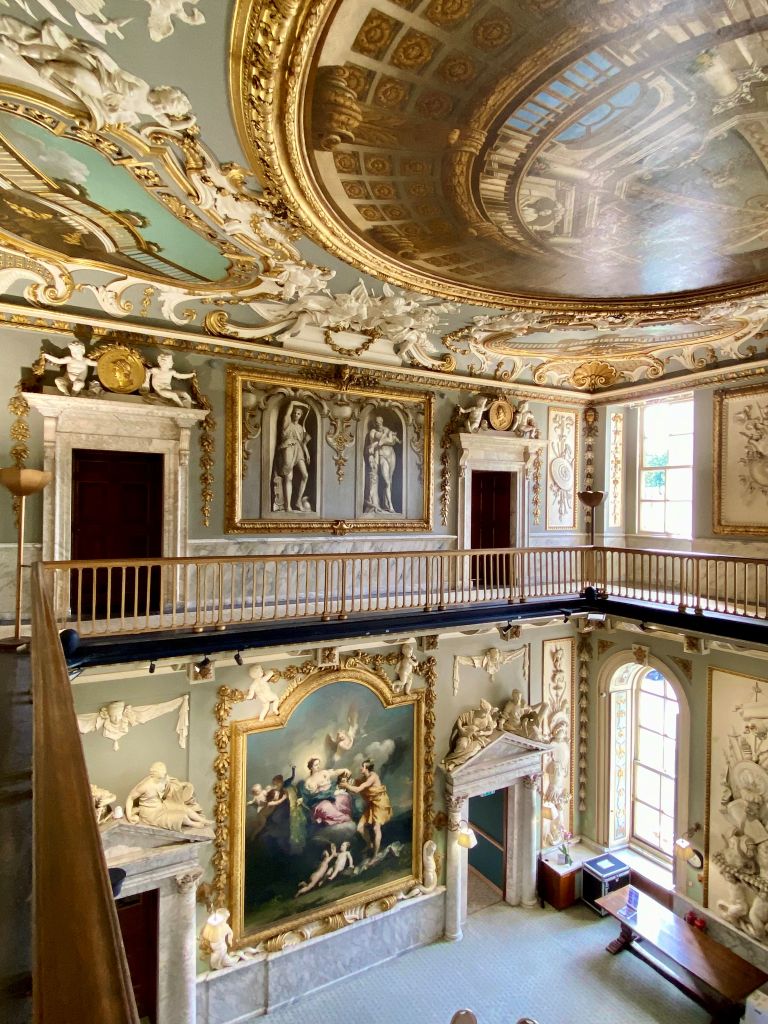
Created during the era of ‘the Grand Tour’ and taking influence from Italianate architecture, the spectacular entrance hall features stucco work depicting Roman military motifs and four paintings by Jacopo Amigoni.
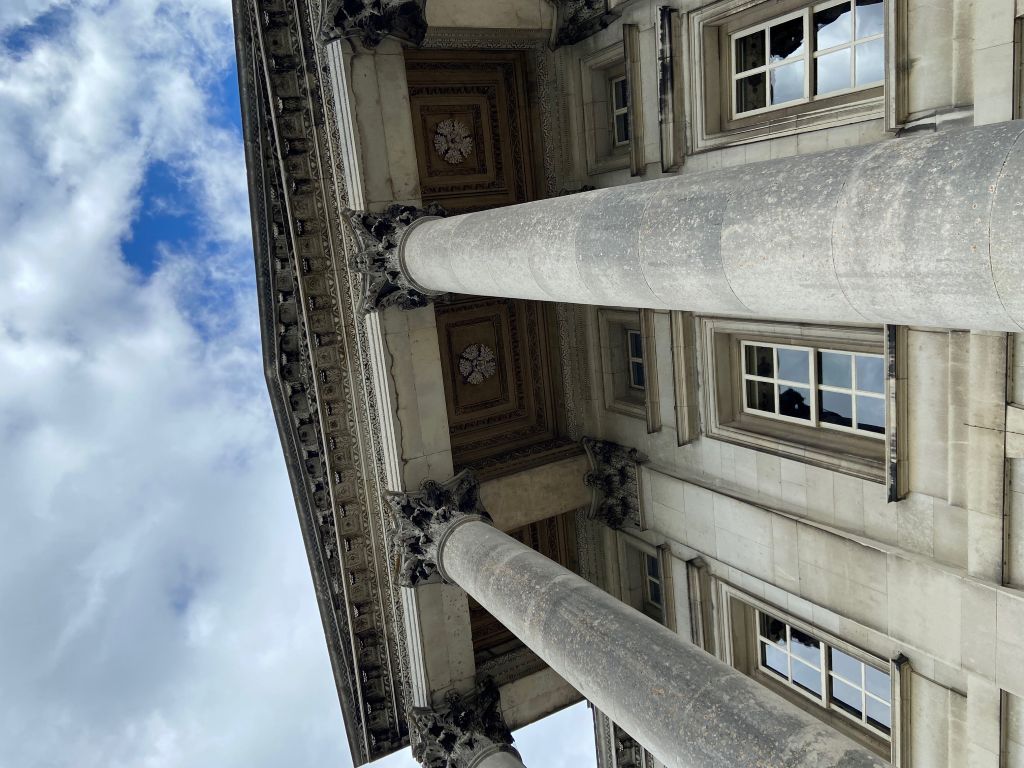
The Palladian transformation of the property - which began in 1726 and continued throughout the 1730s and 1740s – involved adding the colonnaded portico as well as significantly extending and cladding the previous brick building which was refaced in Portland stone from Dorset.
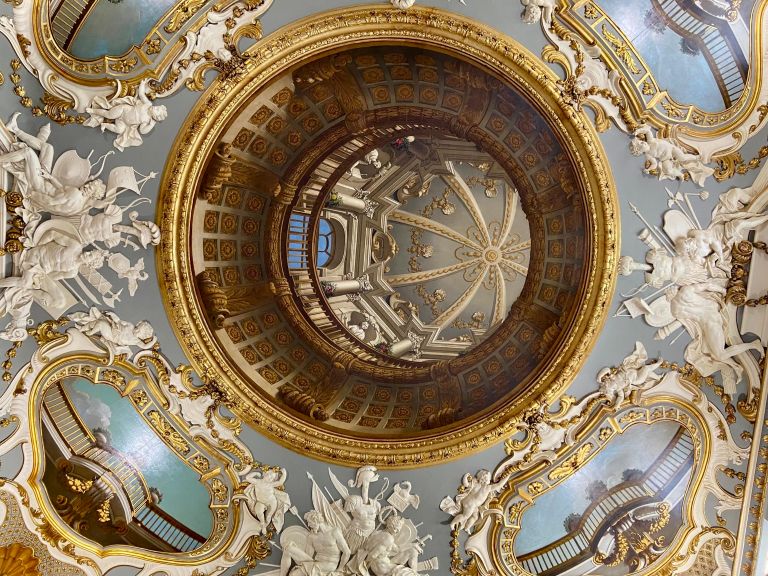
The intricate trompe l’oeil ‘dome’ in the ceiling of the Venetian-inspired entrance hall is believed to be by Gaetano Brunetti
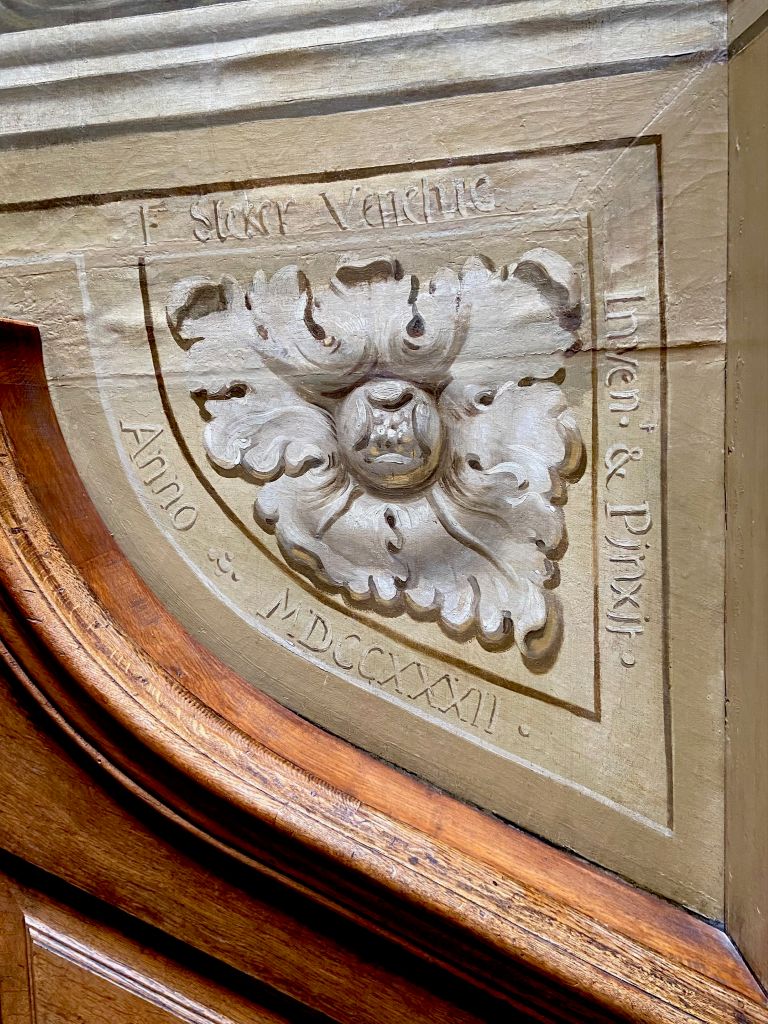
It was only during significant restoration of artworks that the Moor Park Heritage Foundation discovered that many of the Grisaille paintings were by Francesco Sleter, including this smaller detail which features in a nook of the Baroque staircase (1685-1775)
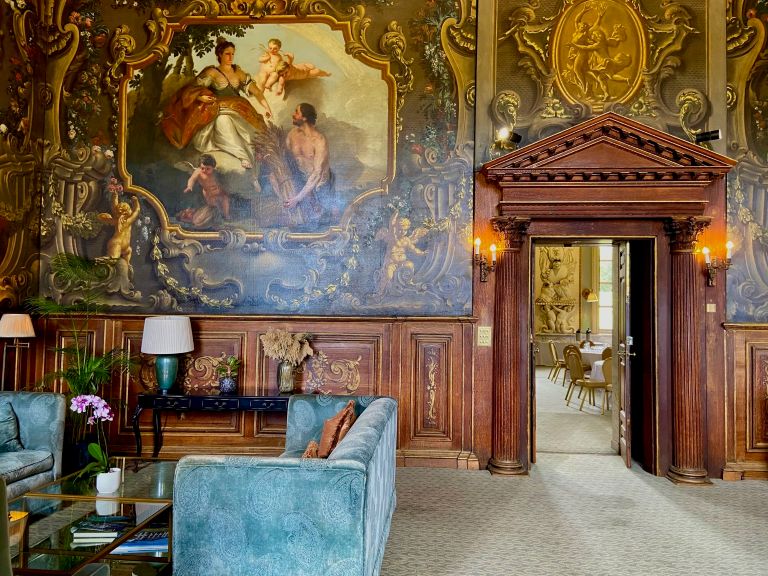
The salon, which survives from the Duke of Monmouth’s iteration of the house at Moor Park, overlooks the rear view and the gardens and features a ceiling by Antonio Verrio as well as mythological paintings by Francesco Sleter.
A BIID Member review:
Katie Hyde, founder and lead designer of Atelier Interior Design shares the benefits of her visit:
“Peering behind the facade of all manner of buildings is to experience them in an immersive way: living and feeling them by being IN them rather than just LOOKING at them on a screen. For me, a private property tour stirs intrigue about both its architectural and social history, and I think we experience a building and the artisanship of a period in a completely different way when standing in it. At Moor Park, the grandeur was breath taking. You don’t half notice the scale and feel tiny when standing central in the cubed, two-storey 12m-high galleried Entrance Hall! You can sense the history through the gilt, the marble, the colour, pattern, sculpture and trompe l’oeil that all collide in breath-taking interior design. It was quite a contrast to my BIID visit to the Regency Townhouse in Brighton, which is stripped back and bare so that the bones of the building are revealed in a fascinating way along with layers of fashionable regency paint colours, and details that convey the social history of the ‘Upstairs and Downstairs’ divide.
“As designers we can spend so much time rushing from one project to the next in the role of ‘The Inspirer’ that we don’t always give ourselves space to get back to basics and take the chance to be inspired. For me, that’s the real value of this kind of CPD. You leave refuelled with knowledge and sensory delight. The visual treats and historic reference points stay with you and keep percolating long afterwards! The artistry finds its way into your own thinking, and possibly into your own work when creating immersive experiences for others. So surely that completes the creative circle?!"
For similar opportunities look to the BIID events page
Notes: Today, the mansion is the clubhouse for a members-only golf club, also held under the protected status of the Moor Park Heritage Foundation. The charitable trust allows limited access to pre-arranged parties for educational purposes.
Susan Bennett – who was our guide – is also author of the booklet, “History of Moor Park Mansion” which can be purchased from Moor Park Golf Club.
Anna Burle’s thoughts on innovating with AI within the interior design industry
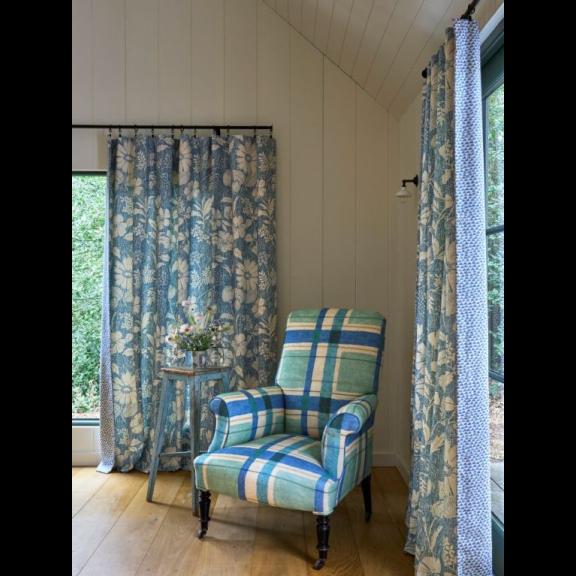
Discover the story behind George & Minnie, the contemporary fabric and wallpaper brand

Exploring the new WELL Interiors designation with IWBI Senior Vice President Ann Marie Aguilar
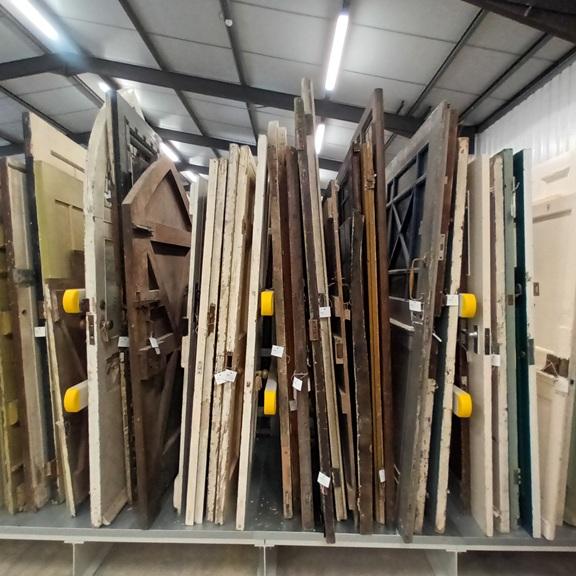
The Brooking Collection brings together architectural features spanning five centuries of British design and craftsmanship, from historic windows and doors to staircases and decorative ironwork.

We're looking for BIID Registered Interior Designer® to volunteer as mentors for our Student Design Challenge this November