
Key Insights From The BIID Inclusion Focus Group
Discover the key topics that arose from the March 2026 D&I focus group

In March 2026, the British Institute of Interior Design (BIID) brought together a diverse group of professionals from across and around the interior design sector, chaired by an expert facilitator, to explore an important question: how inclusive is the profession, and what needs to change? Following on from previous diversity research commissioned by the BIID, the aim of this session was to gather practical perspectives on representation, accessibility, and opportunity in interior design. Participants included residential and commercial interior designers, architects, business mentors, platform founders, early-career professionals, career changers, BIID members and non-members, as well as contributors based both in the UK and internationally.
The conversation focused on three broad themes: gender representation and progression, physical disability and accessibility in the profession, and wider questions around stereotypes, barriers and belonging. While participants brought different experiences and perspectives, several clear themes emerged.
Representation is not experienced equally
The focus group explored who is visible in the profession, and whether different groups experience interior design differently. Gender emerged as an important theme. Participants described interior design as appearing female-dominated at grassroots and day-to-day practice level, while men were often perceived to hold greater visibility in prestigious, commercially powerful or high-profile areas of the sector. Participants highlighted how perceptions of authority, professional status and visibility may shape career progression differently. Structural barriers such as caring responsibilities, flexibility in studio environments and differing career pathways were also discussed.
At the same time, contributors stressed that barriers are not limited to gender alone. Conversations touched on race, class, geography, age and access to networks, with some participants feeling that the profession can still appear narrow in who it attracts and celebrates. A recurring point was the importance of representation itself. Seeing people with similar backgrounds, experiences or identities in visible positions can influence whether someone feels they belong in a profession in the first place. Participants discussed the need for broader visibility across the sector, including more stories, profiles and examples of designers from different backgrounds, regions, career stages and lived experiences.
Accessibility and disability: an important gap in the conversation
A particularly significant theme was disability and accessibility. Participants repeatedly noted how rarely they encounter visibly disabled professionals in studios, trade shows, design events or site environments. Importantly, many were also honest that most people in the room were speaking from observation rather than direct lived experience. Rather than weakening the discussion, this was seen as an important finding in itself. If disabled voices are not visible in professional spaces, there may be barriers that are not yet fully understood.
The discussion also moved beyond physical access alone. Participants highlighted how accessibility can include communication, workplace culture, assumptions about who can participate, and how professional environments are designed. Technology emerged as an area of opportunity. Participants emphasised the importance of hearing more directly from disabled professionals and people with lived experience to better understand barriers and opportunities within the profession. Ideas such as virtual walkthroughs, remote collaboration tools, AI-enabled site visibility and flexible working models were discussed with a view that they could make participation easier for a wider range of professionals, including disabled designers, carers and those balancing multiple responsibilities.
There was also a wider conversation about how accessible design is approached in practice. Several participants suggested accessibility should be seen not simply as compliance or adaptation, but as an important part of good, thoughtful design.
Structural barriers still shape access
The focus group also highlighted broader structural barriers affecting who enters and progresses in interior design. Participants raised concerns about the cost of education, unpaid or low-paid routes into the profession, limited entry-level opportunities and a perception that opportunities can feel concentrated in London and other major cities. Others spoke about the challenges faced by second-career entrants and people without established professional networks. Taken together, these factors were seen as shaping who can realistically access the profession and who may feel excluded before they even begin. Several contributors stressed that talent and ambition are not limited to particular regions, backgrounds or career paths, and that widening routes into interior design could benefit both the profession and the people it serves.
Participants also highlighted the importance of reaching younger audiences earlier. Many felt there was value in introducing young people to interior design as a profession before career assumptions become fixed, particularly through schools, colleges and broader career awareness. Support and progression also emerged as important themes. Contributors discussed the value that mentoring, sponsorship, bursaries and more flexible pathways into the profession could offer, particularly for those entering from different backgrounds or at different life stages.
A profession still misunderstood
One of the strongest messages from the discussion was that interior design continues to face a perception problem. Participants felt that interior design is too often viewed as decorative, aspirational or associated mainly with luxury living. Many described a gap between public perception and the reality of the profession — a field that combines creativity with technical knowledge, problem-solving, regulation, wellbeing, accessibility and commercial thinking.
There was a shared feeling that interior designers still frequently need to explain the value of their work, particularly when compared with related professions such as architecture or engineering, which are often seen as more serious or essential. Participants suggested this perception matters because it influences who enters the profession, who sees it as a viable career, and how designers themselves are valued. If interior design is seen narrowly, opportunities to attract a broader and more diverse talent base may also become narrower.
A recurring theme was the need to better explain the profession itself. Participants felt there was an opportunity to communicate more clearly what interior designers actually do and the role they play in shaping wellbeing, productivity, functionality and accessibility.
The role of BIID
Alongside reflections on the profession itself, participants also turned the conversation back towards BIID.
There was recognition that BIID has an important role to play in helping shape the profession’s future, from gathering better evidence and promoting a clearer understanding of interior design to widening access and encouraging broader participation. A strong message from the discussion was the importance of reaching beyond existing networks. Participants encouraged wider engagement with people who may not already be connected to BIID, as well as stronger partnership working with communities, education providers and trusted networks. The accessibility, affordability and inclusivity of professional participation were also raised. Contributors discussed barriers linked to cost, events, routes into membership and wider access to opportunities across the profession.
Several participants highlighted the importance of language and framing, particularly around conversations about standards and inclusion. There was a strong sense that widening participation should be understood as strengthening the profession rather than compromising excellence. Participants also repeatedly called for better evidence and stronger data about who enters, progresses through and experiences the profession, while recognising that meaningful progress should not depend on waiting for perfect information.
Finally, communication and accountability emerged as important themes. Contributors expressed enthusiasm for continued dialogue, alongside a desire for clearer communication about outcomes, priorities and how consultation informs future activity.
The discussion highlighted that inclusion in interior design is not shaped by one issue alone. Participants described a profession influenced by perception, visibility, cost, geography, opportunity, accessibility and representation. While experiences differed, there was a shared view that continued listening, wider engagement and practical action will be important in helping the profession become more inclusive and representative over time.
Please click here to read about the actions and initiatives we are implementing following on from the focus group.
We would like to extend our appreciation for every individual who generously gave their time to the focus group.
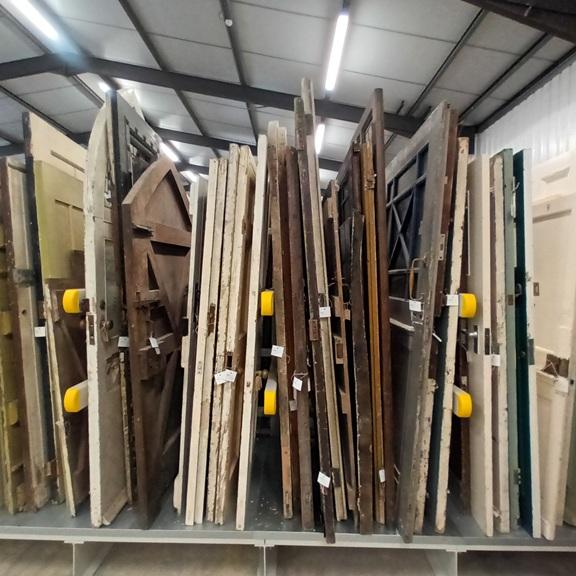
The Brooking Collection brings together architectural features spanning five centuries of British design and craftsmanship, from historic windows and doors to staircases and decorative ironwork.

We're looking for BIID Registered Interior Designer® to volunteer as mentors for our Student Design Challenge this November
Mark Lissauer of Christopher Hyde Lighting on the enduring appeal of classic lighting
Sam Fisher, Event Director of Decorex, explains what visitors can expect at this year’s show

Practical guidance to support more responsible choices across the design and construction industries
We hear from BIID Awards Headline Sponsor Havwoods on the materials, textures and influences shaping interiors