
Professional Practice Series: Tenders

Aims
To be able to demonstrate your knowledge of the documentation and action required for the submission of successful tenders, even if you are not doing it yourself.
- Demonstrate knowledge of different types of tenders
- Prepare and collate documentation in sufficient detail to enable a tender or tenders to be obtained for the construction or project fit-out
- Identify actions and the process used to evaluate potential contractors and/or specialists
- Obtain and appraise tenders
- Submit recommendations to the client
- Demonstrate the ability to cross-check tenders

Objectives
- Clarify what a tender is
- Identify what information should be included within a tender
- Consider how the information should be presented
- Explain why you should use a tender
- Explain the designer’s role in the development of a tender
- Explain the tender process

Why use a tender?
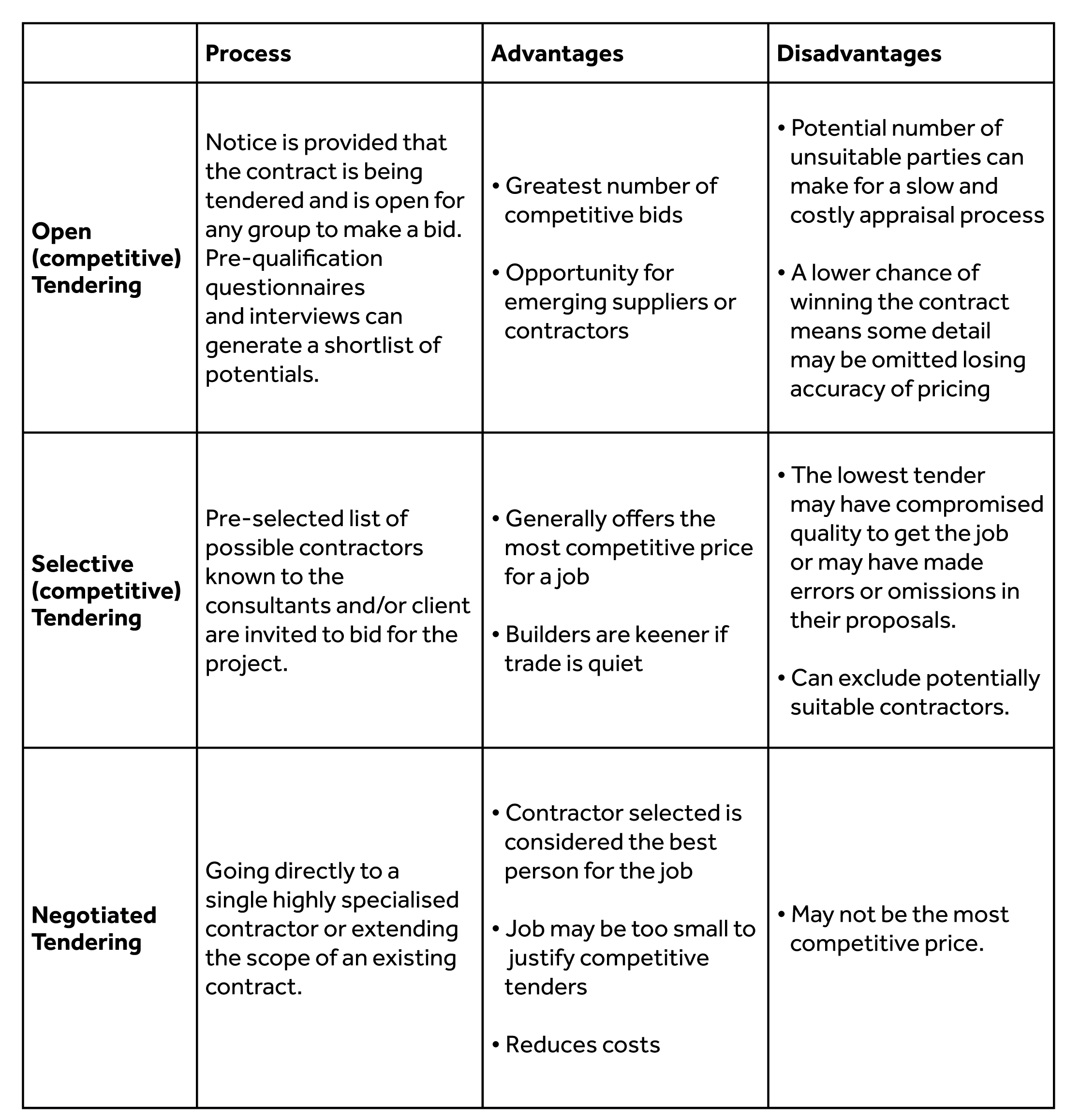
Designer’s role when not the lead consultant
- Provide relevant drawings, and specifications for interior design-related works to the lead consultant for integration in, and coordination with the tender document pack.
- Obtain any interior specialist sub-contractor supply tenders where appropriate.
- Get quotes for FF&E items, if relevant, to present to the client and update the quantity surveyor accordingly.

Some project scales do not warrant the appointment of a quantity surveyor. This is when the interior designer acts as the lead consultant overseeing all processes.
For less complex projects where a main contractor is not required, the interior designer will follow similar processes for the appointment of required specialist contractors, e.g., assisting with sourcing, vetting, and appointing a decorating contractor, joinery contractor, kitchen specialist, etc. While the process and documentation may be simpler, recording of communication, site reviews, drawings, the issuing of schedules, and client recommendations should be provided for.
Once the client decides they want to tender the project…
Draw up a list of potential tenderers which may include:
- A list of main tenderers:
• May be drawn from contact with tenderers providing good quality recent work
• Personal recommendations are valuable but other design practices and information from quantity surveyors or other building sector professionals may increase the potential suitable tenderers. - A list of specialist tenderers:
As above, although the specialist nature of some jobs may rely more heavily on research and other agencies if the specialisms are new to the contractor.
When selecting companies to invite to tender, consider…
- Is the company a suitable size?
- How long has the company been in business?
- Do they have relevant experience; both in terms of their in-house team and the nature of projects completed to date?
- Are there any recent clients available where you can view the quality of their work?
- Is the company financially stable? Using the client’s accountant may be one way of determining this information or accounts may be available online through Companies House.
- Is their workforce permanently employed or on casual or short term contracts?
- Number of invitations. 3-5 tenders are an appropriate number, providing enough choice and not discouraging unsuccessful companies from future bids.
Developing the Tender Pack
The lead consultant will start to develop the tender documents set, integrating and coordinating packages from all relevant design team consultants.
They will also obtain a Bill of Quantities from the Quantity Surveyor unless the project is based on a Minor Building Works Building Contract.
This provides:
- Project-specific measured quantities of items of work, broken into a series of packages to match the tender packages drawings and specifications.
- A fair and accurate system for assessing and comparing tender returns, both in terms of their final overall price and the breakdown of individual items, allowing detailed insight into the level of value received.
Presenting the potential tenderers list to the Client
Put the list to the client for approval of:
Invitation to Tender: contacting potential tenderers
The invitation indicates the other tenderers and requests information on:
- Similar projects recently completed with names and contact information for the client and lead consultant.
- The number of permanent staff employed including office and off-site staff
- Information about current work including value, location, and employer.
Invitation should include:
- Date for start of works
- Anticipated period of works (in number of weeks)
- Request for completion date of works and provisional scheduling, if possible
- Any liquidated damage costs (monetary damage the client will suffer if the work is late which may subsequently be sought from the tender)
- Appointed consultants where known
- Overview details of the project; alterations, extensions, new build, refurbishment, or other relevant particulars
- The deadline for submission
Tender Document Package
A comprehensive and clear tender document package is sent to interested potential tenderers. For larger projects these are best broken into a series of packages of works, to match those of the Bill of Quantities, to allow efficient pricing and comparison. The final document set should include:
- Drawings & documents schedule, specifying drawing numbers
- Design drawings
- Specification schedules
- Schedule of Works
- Bill of Quantities, tender pricing document
- Form of Contract
- Indicate any nominated sub-contractors
Designers should keep a record of the Schedule of Tenders, i.e. when each tender was issued, when it was returned and the date the tender closed.
Note on the documentation that where there is not enough detail in specific areas for accurate tender pricing, then a provisional sum should be inserted by the contractor or specialist as an allowance estimate. This should ensure the client is reviewing a realistic and comprehensive overall cost plan.
Tender Evaluation Process
A thorough review of all submitted tender information is required to ensure the proposals are properly understood and suitably priced, with no errors or omissions that may cause later grievances. This is typically conducted by the quantity surveyor and lead consultant, or any key parties involved in the preparation of the tender process, such as the project manager and possibly the client. If the client has not been involved in the process, a suitable summary report will be prepared with final recommendations for the client’s consideration.

While the cheapest tender may initially seem most attractive, it may not always be the most appropriate. It must be determined if any errors or omissions have resulted in the cheaper rate. Where it is a genuine and accurate lower rate, other factors such as the proposed programme, experience, and quality of work must also be considered in order to ensure the best long-term value for the client.
Notification of Tender Results
Once all the tenders have been received and evaluated, they need to receive feedback.
- The successful tenderer should be notified and informed that the quantity surveyor will review the tender, with the letter of intent/award to be issued confirming the date, amount, and when contracts are due to be signed.
- The second-best tenderer should be contacted to indicate their position in the process and the fact that the final decision is pending a review.
- The unsuccessful tenders should be given the results of the tender and told that the final decision is up to the client and they may be contacted if the client does not wish to proceed with the chosen tender.
Tenders for FF&E Fabrication & Supply

The next stage is to invite tenders for FF&E, where applicable. Quotations submitted should include price and delivery date and outline any key responsibilities (such as the removal and proper disposal of packaging).

Refer to pages 247 to 251 the section on Methods of Tendering in the BIID Interior Design Project Book
Go to the Members Area and filter by Professional Practice Series to find more articles offering support on practicing as an interior designer.
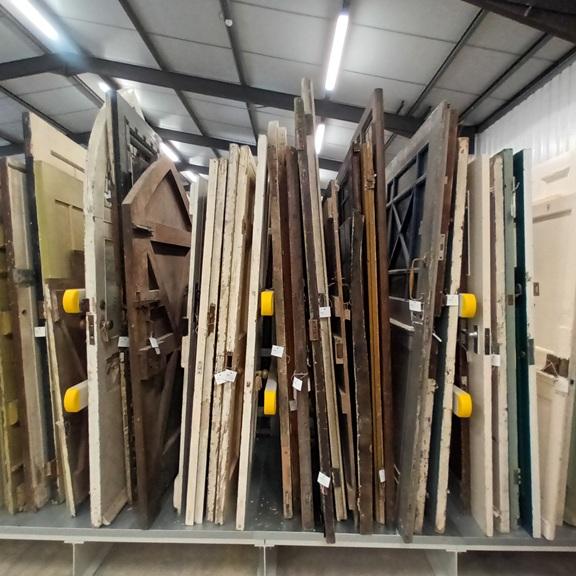
The Brooking Collection brings together architectural features spanning five centuries of British design and craftsmanship, from historic windows and doors to staircases and decorative ironwork.

We're looking for BIID Registered Interior Designer® to volunteer as mentors for our Student Design Challenge this November

Mark Lissauer of Christopher Hyde Lighting on the enduring appeal of classic lighting

Sam Fisher, Event Director of Decorex, explains what visitors can expect at this year’s show

Practical guidance to support more responsible choices across the design and construction industries

We hear from BIID Awards Headline Sponsor Havwoods on the materials, textures and influences shaping interiors